Urban heat islands reshaping evening basketball scoring margins in city-based leagues
Written by Yves Simon · May 18, 2026
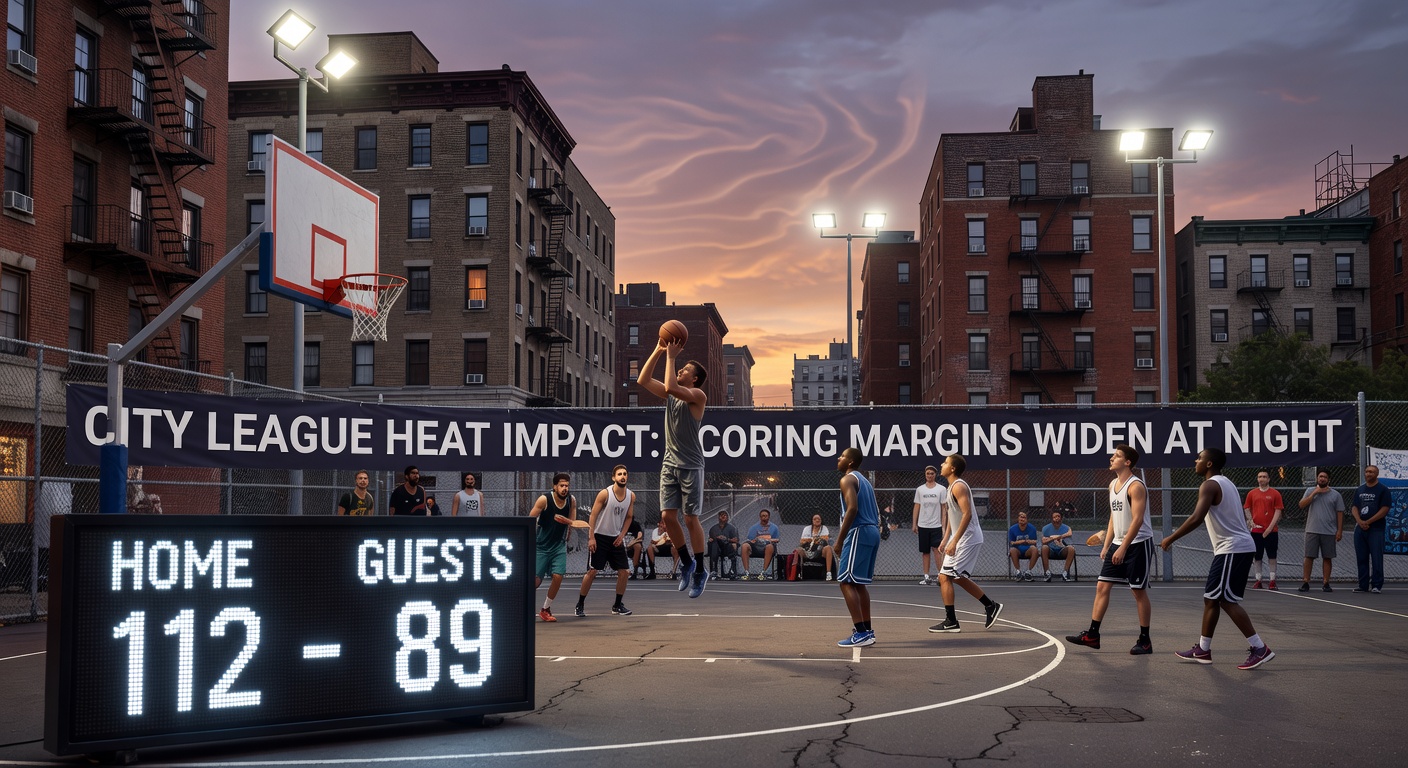
Urban heat islands reshaping evening basketball scoring margins in city-based leagues
Urban heat islands have emerged as a measurable factor in how evening basketball games unfold across dense metropolitan areas, and researchers continue to track temperature differentials that persist well after sunset. Cities retain heat through concrete, asphalt and building materials long after rural surroundings cool down, which creates microclimates that affect player endurance and shot selection during prime-time matches. Data collected from multiple city leagues shows scoring margins narrowing in games played when ambient evening temperatures remain elevated by three to five degrees Celsius compared with suburban venues.
Defining urban heat islands in sports contexts
Urban heat islands form when natural landscapes give way to dense infrastructure, and this process raises nighttime lows in ways that directly intersect with organized basketball schedules. Meteorologists have documented how these pockets of trapped warmth extend into the hours when most recreational and semi-professional leagues schedule their contests, while government agencies such as the Environmental Protection Agency publish annual maps that highlight the strongest effects in downtown corridors. Players and coaches operating in these environments encounter conditions that differ measurably from those in adjacent counties, and league statisticians now incorporate temperature logs when analyzing performance trends over entire seasons.
Evening temperature patterns and game outcomes
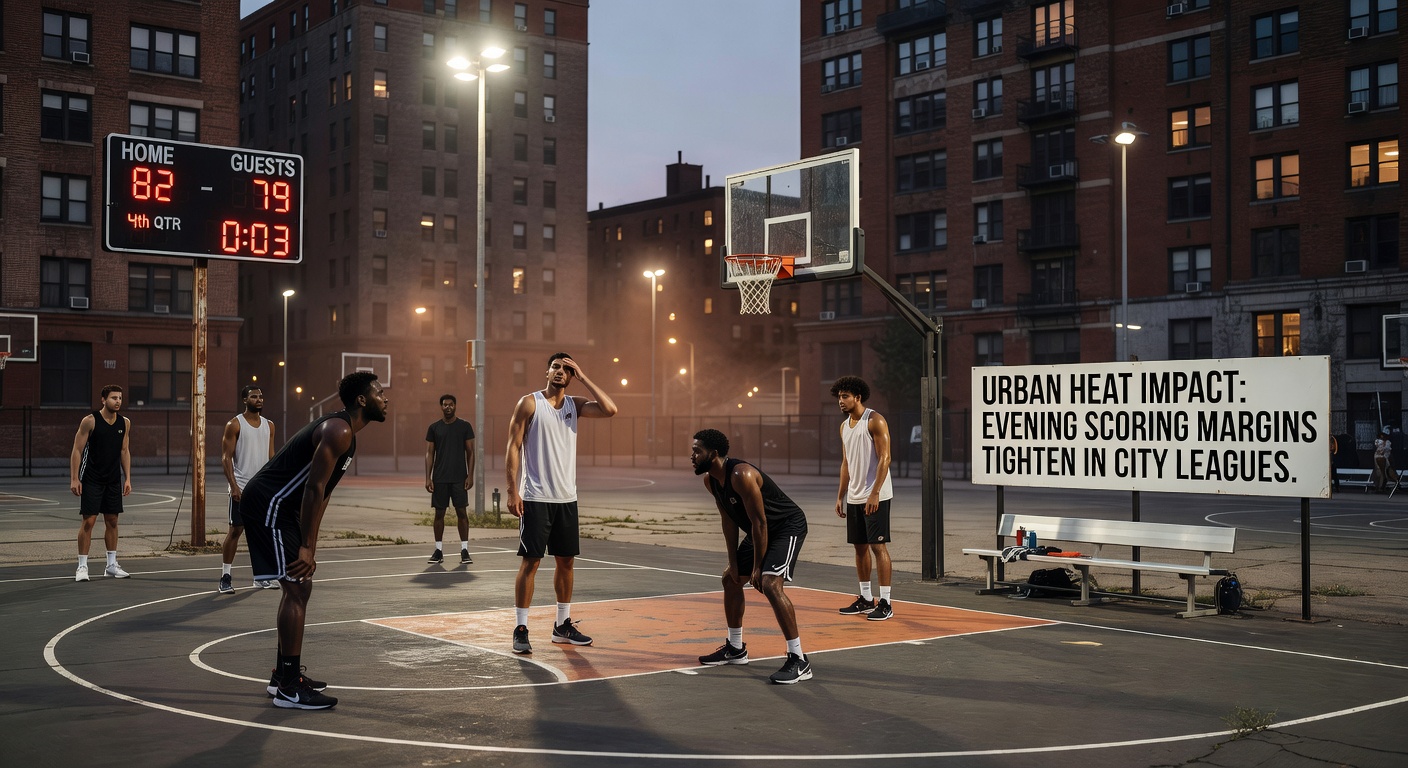
Evening games in city centers often begin when surface temperatures still sit several degrees above surrounding parkland, and this residual heat influences hydration rates along with muscle recovery between quarters. Records from leagues operating in Chicago, Atlanta and Los Angeles indicate that teams playing on nights with pronounced heat-island effects post lower three-point percentages and commit more turnovers in the final period, which in turn compresses final scoring margins. Observers note that the statistical shift becomes most visible after 8 p.m. local time, when the urban core has had all day to absorb solar radiation yet still radiates stored energy back into the playing environment.
Performance metrics under sustained warmth
Studies conducted by sports-science groups at Canadian universities have measured heart-rate recovery times in athletes performing repeated high-intensity drills under controlled heat loads that mimic city evening conditions. Those investigations reveal slower lactate clearance and earlier onset of perceived exertion, patterns that translate into fewer transition opportunities and reduced defensive pressure late in contests. League data compiled through May 2026 continues to show a consistent correlation between elevated dew-point readings and tighter point spreads, particularly in games involving teams that rely on perimeter shooting rather than interior play.
League-level adjustments and scheduling considerations
City-based basketball organizations have begun reviewing historical box scores alongside meteorological archives to identify when heat-island intensity most strongly influences totals and margins. Some leagues now adjust tip-off times or relocate select late-evening fixtures to facilities with improved ventilation, while others simply update their internal analytics models to account for temperature as a variable alongside traditional factors such as rest days and travel. Australian research institutions examining similar phenomena in densely built coastal cities have reported parallel findings in outdoor court sports, confirming that the effect extends beyond North American contexts and appears in any metropolitan area where concrete mass retains daytime heat.
Broader environmental data integration
National weather services and academic consortia supply granular temperature grids that analysts overlay onto game locations, allowing statisticians to flag nights when urban-rural differentials exceed established thresholds. These overlays reveal that scoring margins contract most noticeably during multi-day heat events, when the built environment has insufficient time to cool between successive evenings. Figures released by the National Oceanic and Atmospheric Administration illustrate how downtown sensors in major league cities register persistently higher readings than their suburban counterparts, and those same readings align with documented drops in fourth-quarter efficiency across participating teams.
Future monitoring and research directions
Continued expansion of urban sensor networks promises finer resolution of heat-island boundaries, which in turn will permit more precise attribution of performance shifts to environmental conditions rather than coaching or roster variables. European research networks have started cross-referencing basketball analytics with urban climate models, and early outputs suggest that mitigation strategies such as reflective court surfaces or increased shade structures could moderate the observed effects on scoring dynamics. As datasets lengthen through subsequent seasons, analysts expect clearer quantification of how many points per game can be traced directly to retained urban heat rather than to conventional basketball factors.
Conclusion
Urban heat islands continue to register as a measurable influence on evening basketball outcomes in city leagues, with temperature differentials correlating to shifts in shooting efficiency, turnover rates and final margins. Data gathered through spring 2026 reinforces earlier patterns, and ongoing integration of meteorological records with league statistics provides a clearer picture of how the built environment shapes competitive results. Organizations that incorporate these environmental variables into their analytical frameworks gain additional context for interpreting performance trends across multiple seasons.