Tracking Humidity Fluctuations and Their Effects on Serve Speeds During Outdoor Tennis Tournaments in Tropical Climates
Written by Rafael Beck · May 30, 2026
Tracking Humidity Fluctuations and Their Effects on Serve Speeds During Outdoor Tennis Tournaments in Tropical Climates
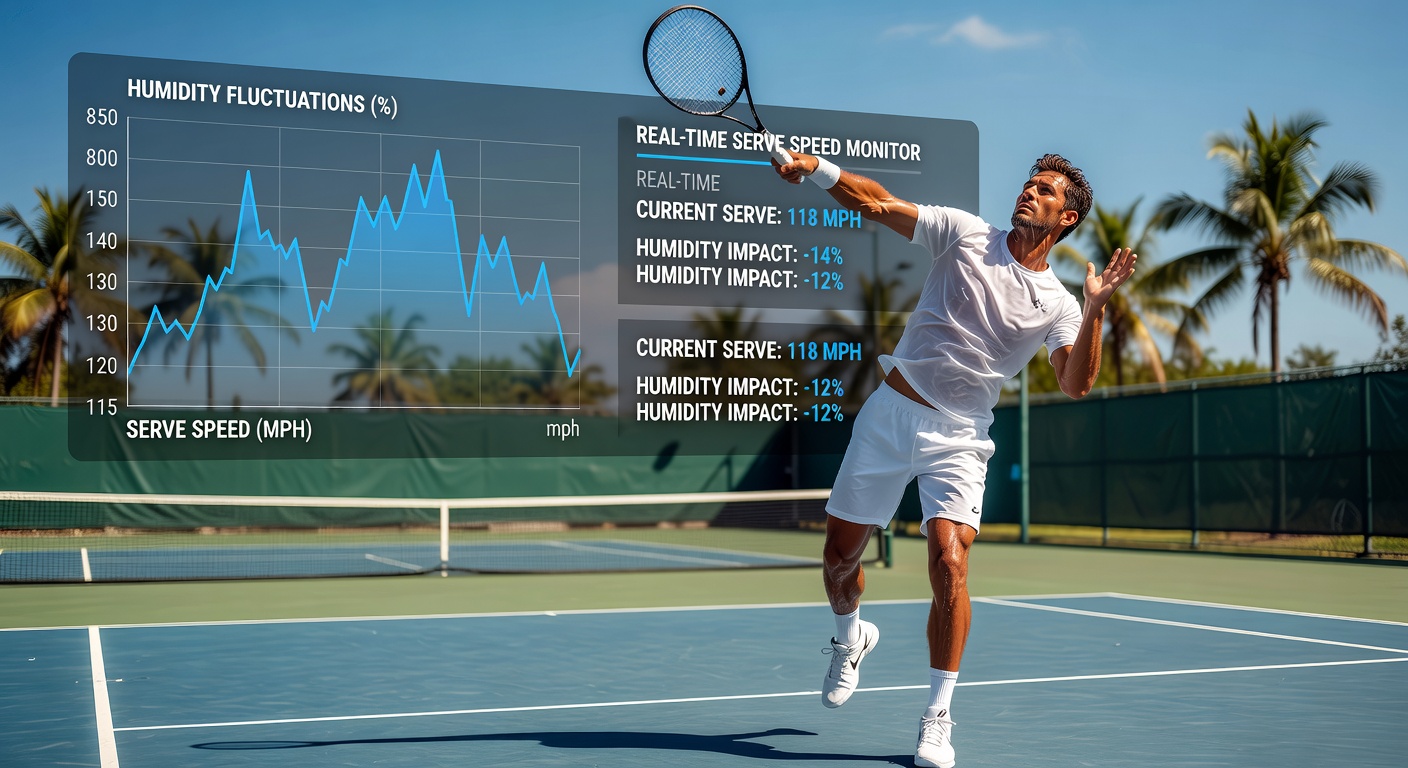
Humidity levels shift rapidly in tropical regions where outdoor tennis events take place, and researchers track these changes because they alter air density along with ball behavior during serves. Data collected at venues in Southeast Asia and northern Australia show that relative humidity often climbs above 80 percent during afternoon matches while temperatures hover near 32 degrees Celsius. These conditions change how the tennis ball travels through the air and how players grip their rackets, which in turn influences recorded serve speeds.
Environmental Conditions in Tropical Tournament Locations
Tournaments scheduled in cities such as Singapore, Bangkok and Darwin face consistent high humidity because of their proximity to warm ocean waters. Weather stations operated by national meteorological services record daily fluctuations that begin with lower morning readings around 60 percent and rise sharply after midday as solar heating increases evaporation. Players and coaches review these hourly reports because serve velocity measurements taken during qualifying rounds differ noticeably from those recorded in evening sessions once humidity peaks.
Equipment manufacturers adjust ball specifications for these climates, yet the core rubber core still absorbs moisture when matches extend beyond two hours. Observers note that balls used in prolonged rallies gain weight, which reduces initial velocity when struck at high speeds. Tournament organizers in May 2026 plan to install additional portable sensors around courts in Bangkok to capture real-time humidity data at multiple heights above the playing surface.
Physical Mechanisms Linking Humidity to Serve Velocity
Higher moisture content in the air increases drag on the tennis ball because water vapor molecules interact differently with the felt surface than dry air does. Laboratory tests conducted at sports science facilities demonstrate that a ball traveling at 200 kilometers per hour loses approximately 3 percent of its speed when relative humidity rises from 40 to 85 percent. The effect compounds because the ball also expands slightly after absorbing ambient moisture, which alters its coefficient of restitution upon racket impact.
Grip friction changes simultaneously as players' hands perspire more in humid conditions, leading to minor adjustments in racket angle during the serve motion. Studies published by the International Tennis Federation indicate that these micro-adjustments can reduce effective power transfer by up to 2 kilometers per hour on first serves. Ball boys and girls replace used balls at regular intervals during tropical events to minimize cumulative moisture absorption, a practice that helps maintain consistent speed readings across sets.
Measurement Techniques and Data Collection Practices
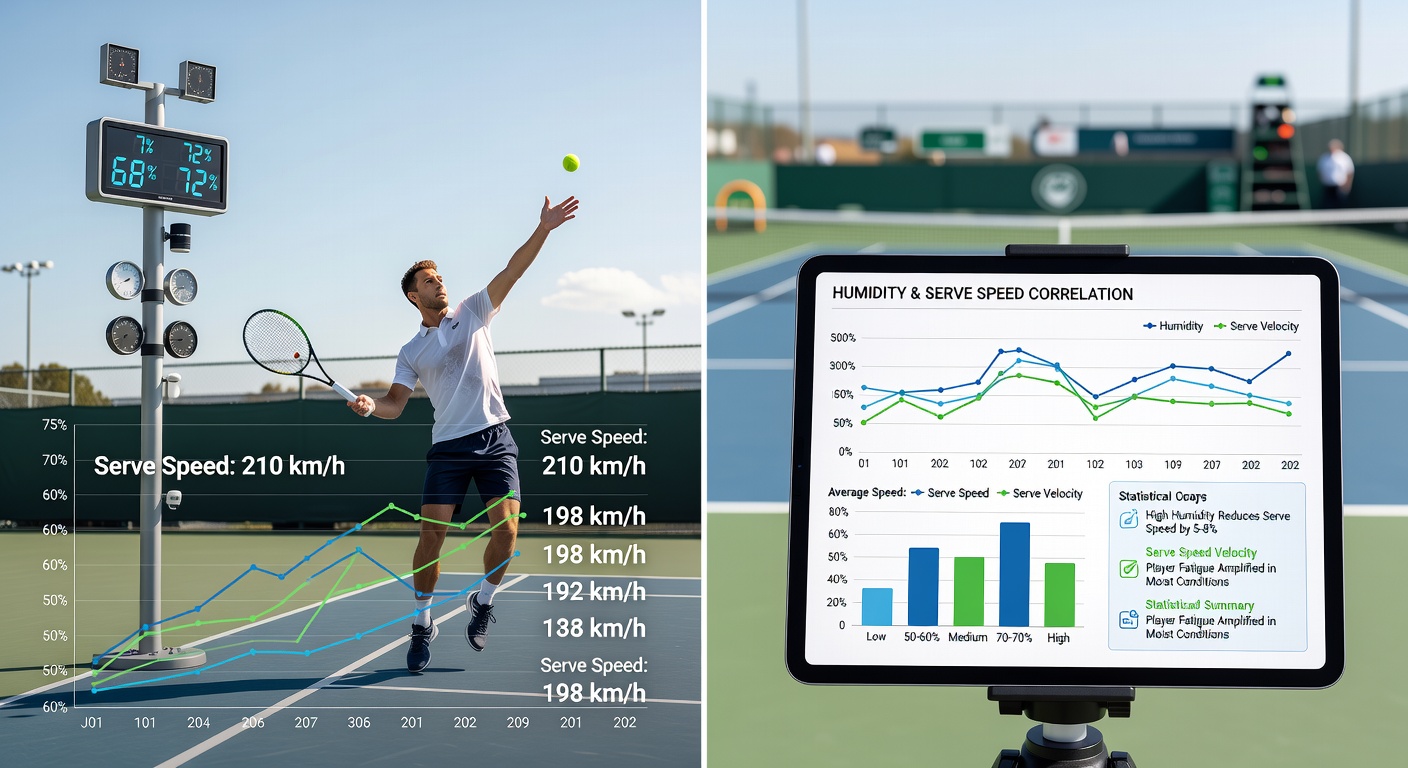
Modern tournaments employ wireless hygrometers positioned at net height and behind baseline areas to record humidity every 30 seconds. These devices feed information into central databases that analysts cross-reference with radar gun readings taken at the moment each serve crosses the service line. Software platforms used by statisticians calculate correlations between humidity spikes and velocity drops within individual matches, producing graphs that coaches review between sets.
Researchers from Australian universities have developed mobile applications that integrate satellite moisture data with on-court sensors, allowing real-time alerts when humidity crosses thresholds known to affect ball flight. During the 2026 season, several events in tropical zones adopted these tools after earlier trials showed improved accuracy in predicting serve speed trends. The same systems flag periods when air density changes rapidly, which often occurs after sudden rain showers followed by intense sunshine.
Observed Patterns Across Multiple Events
Analysis of serve speed records from five consecutive tropical tournaments reveals that average first-serve velocities decline by 4 to 6 kilometers per hour during periods when humidity exceeds 75 percent for more than 90 minutes. Second serves show smaller but still measurable reductions because players already apply less power to maintain control. These patterns appear consistently across left-handed and right-handed servers, suggesting the effect stems primarily from environmental factors rather than individual technique.
Matches played under retractable roofs that remain open during humid conditions display similar velocity drops, confirming that air moisture rather than direct sunlight drives the changes. Data sets compiled by performance analysts include timestamps that allow comparison between qualifying and main-draw matches, where higher stakes sometimes coincide with later start times and therefore different humidity profiles.
Conclusion
Continued monitoring of humidity alongside serve speed measurements provides tournament officials and performance teams with actionable information for scheduling and equipment management. As more tropical venues adopt integrated sensor networks in 2026, the resulting datasets will support further refinement of ball specifications and training protocols tailored to these environments. The relationship between atmospheric moisture and ball flight remains a measurable variable that influences match outcomes in measurable ways.