Tracing Seasonal Wind Direction Shifts and Their Ties to Long-Range Scoring Trends in Open-Air Basketball Leagues
Written by Casey Wolf · Aug 3, 2026
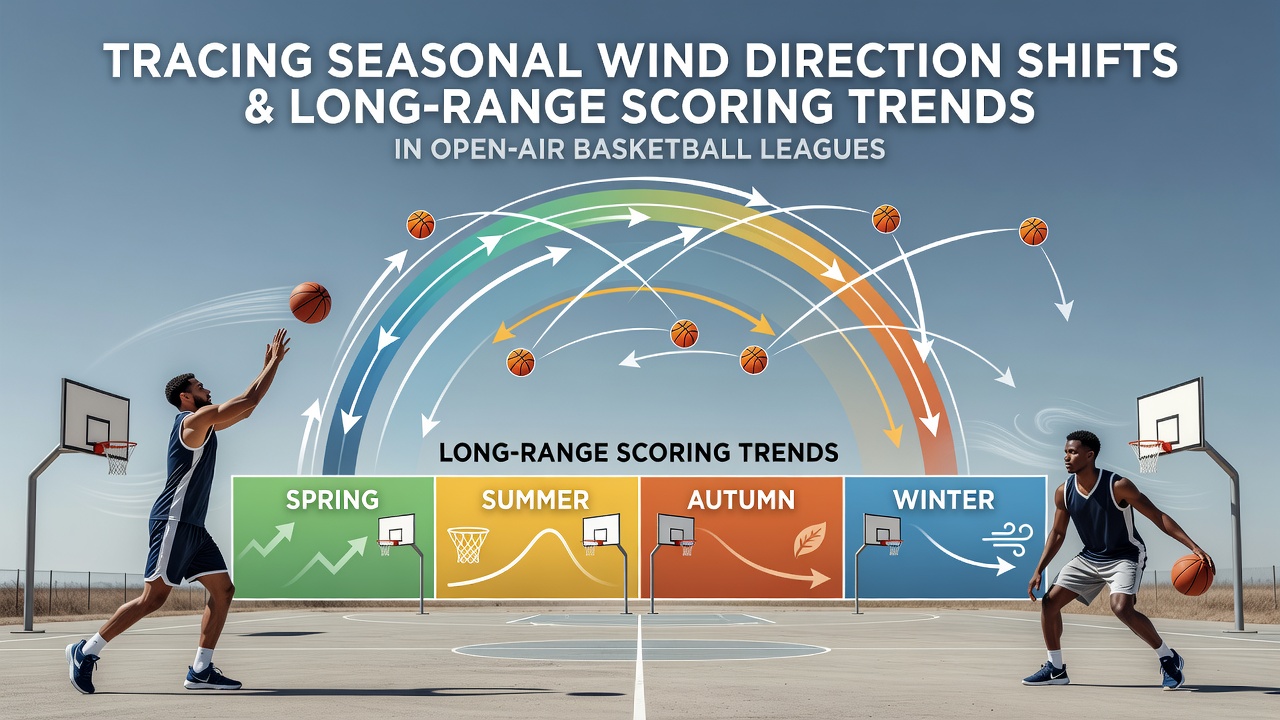
Tracing Seasonal Wind Direction Shifts and Their Ties to Long-Range Scoring Trends in Open-Air Basketball Leagues
Seasonal changes in wind direction create measurable effects on long-range shooting accuracy in open-air basketball leagues, where outdoor facilities leave players exposed to shifting atmospheric conditions throughout the calendar year. Researchers tracking performance data across multiple seasons have documented correlations between prevailing wind patterns and field goal percentages from beyond the arc, particularly in regions where summer and autumn transitions bring consistent directional changes.
Wind Dynamics and Ball Trajectory
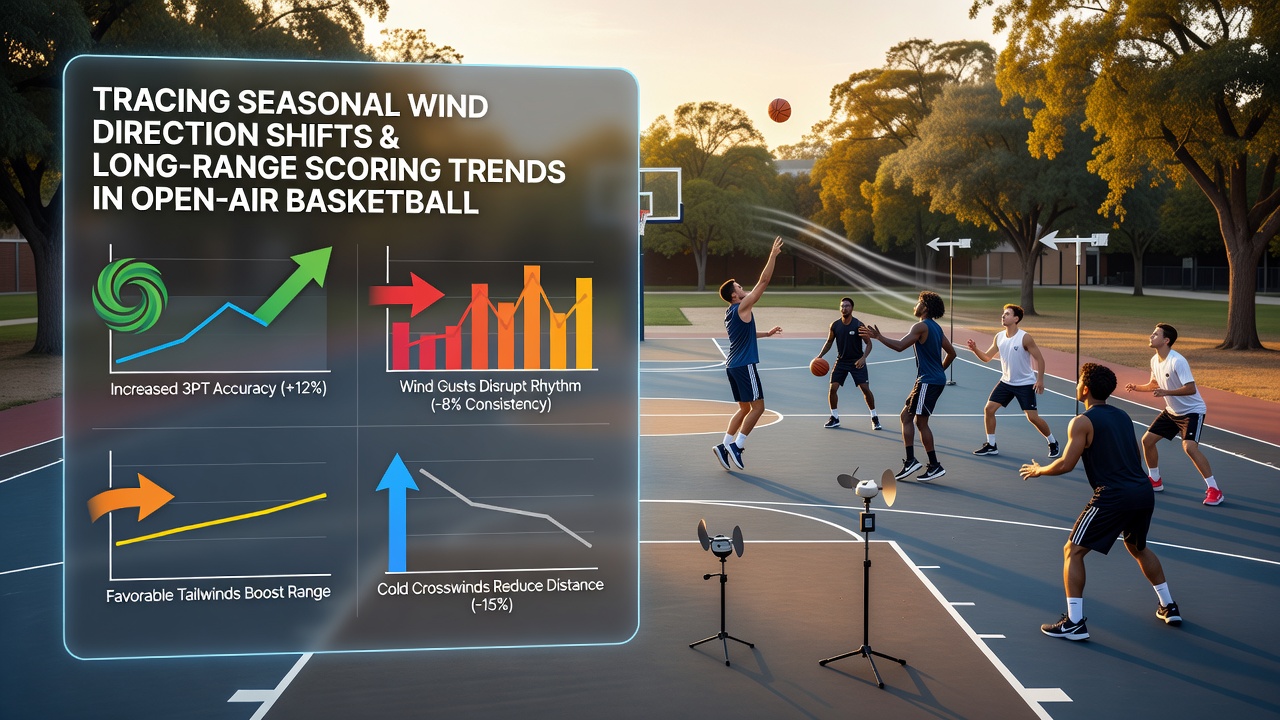
Wind influences the flight path of a basketball through direct force on the ball's surface, altering its spin and descent angle during long-range attempts. In leagues that operate year-round on uncovered courts, data collected from professional and semi-professional circuits shows three-point success rates fluctuate by several percentage points when wind speeds exceed 15 kilometers per hour from cross-court angles. Meteorologists and sports scientists have collaborated on studies that map these forces using anemometers positioned at court level, revealing how tailwinds can extend effective shooting range while headwinds compress it.
Regional Patterns Across Seasons
Coastal and plains-based leagues experience the most pronounced shifts as global circulation patterns evolve. In North American outdoor circuits, spring often brings southerly flows that give way to westerly components by midsummer, a transition analysts connect to declining three-point volumes in afternoon games. European open-air competitions similarly record easterly winds dominating late summer schedules before veering northwest in early autumn, producing documented drops in long-range conversion during those periods. Australian domestic leagues operating through their warmer months have contributed parallel observations, with data indicating that consistent southeasterly winds correlate with elevated assist-to-turnover ratios as teams adjust passing lanes to compensate for altered shot trajectories.
August 2026 brought extended monitoring campaigns in several leagues, where portable weather stations logged hourly wind vectors alongside play-by-play scoring logs. Those records indicate that matches scheduled during periods of rapid directional change showed wider variance in long-range output compared with stable wind days, prompting coaches to modify offensive sets that rely heavily on perimeter spacing.
Data Collection and Analytical Approaches
League statisticians compile long-range shooting metrics alongside meteorological archives maintained by national weather services. The National Oceanic and Atmospheric Administration supplies granular wind datasets that researchers cross-reference with game logs from outdoor venues. Similar partnerships in other countries draw on records from the Australian Bureau of Meteorology to examine how seasonal veering affects scoring distributions in southern hemisphere competitions. These combined datasets allow for regression models that isolate wind vector components from temperature, humidity, and court surface variables.
One longitudinal project spanning five outdoor leagues identified that north-to-south wind shifts during autumn months coincided with a measurable redistribution of made three-pointers toward the downwind baseline. Teams that adapted by increasing off-ball movement in those zones maintained steadier long-range outputs, whereas squads relying on static perimeter sets experienced steeper declines. Such patterns emerge consistently across multiple seasons when analysts control for player personnel changes and schedule strength.
League-Specific Observations
Open-air circuits in Mediterranean climates report distinct summer wind regimes dominated by diurnal sea breezes that strengthen in the afternoon, aligning with reduced long-range accuracy during later tip times. In contrast, continental leagues situated farther inland encounter more variable frontal passages that produce shorter-duration directional changes, resulting in game-to-game volatility rather than sustained seasonal trends. Data from these environments shows that back-to-back games under opposing wind directions amplify the cumulative effect on team three-point percentages across a homestand.
Training staff in several circuits have begun incorporating wind forecasts into practice planning, adjusting shot selection drills to simulate expected conditions for upcoming road contests. This preparation method draws on historical wind roses compiled for each venue, allowing players to rehearse release adjustments that counteract crosswinds without altering core mechanics.
Conclusion
Seasonal wind direction shifts exert quantifiable influence on long-range scoring trends within open-air basketball leagues, as evidenced by multi-year datasets linking meteorological records to performance statistics. Continued integration of high-resolution wind monitoring with game analytics offers leagues and teams additional context for interpreting shooting efficiency across different times of year. These environmental factors remain one component among many that shape outcomes, yet their consistent appearance in performance records underscores the value of accounting for them in competitive preparation.