Stable Shifts and Acclimatization: Unpacking Variance in Thoroughbred Racing Results
Written by Rafael Beck · Jul 18, 2026
Stable Shifts and Acclimatization: Unpacking Variance in Thoroughbred Racing Results
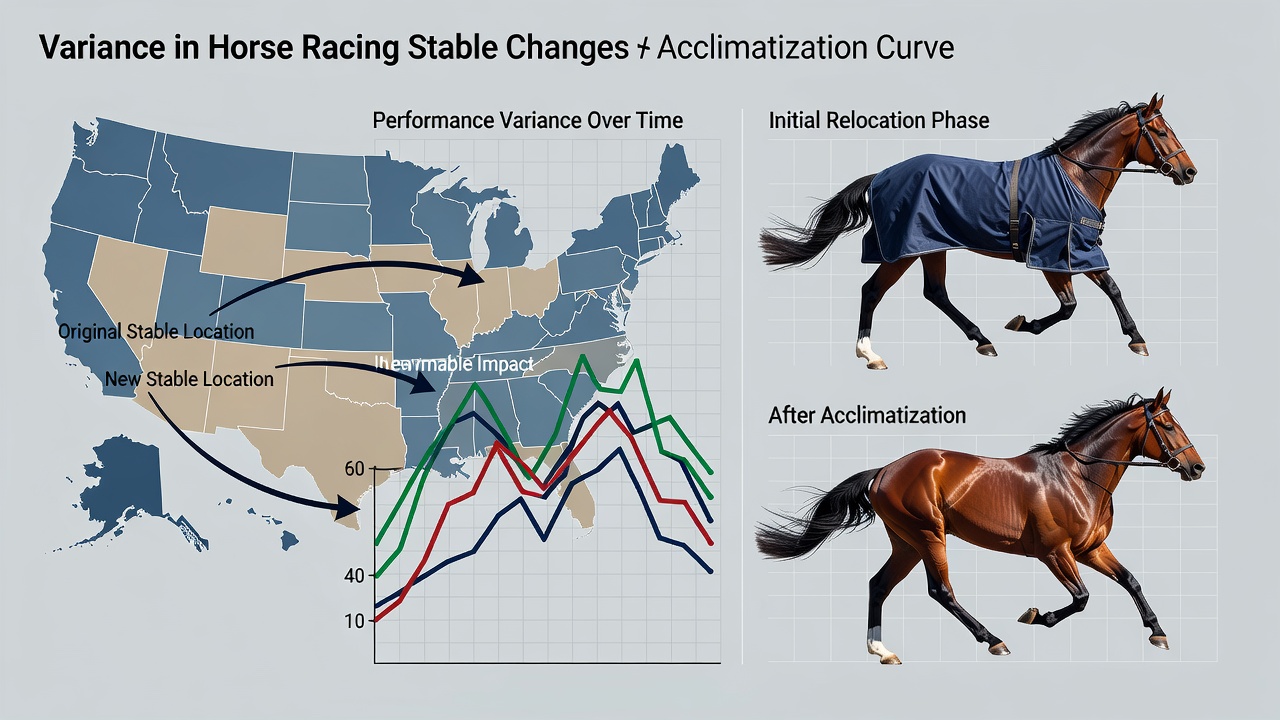
Trainers move horses between yards for various reasons including better facilities, changes in ownership, or strategic positioning near specific tracks, and these relocations often coincide with measurable shifts in performance metrics. Research from the University of Queensland has tracked thousands of runners across multiple seasons and found that horses experience an initial dip in speed figures and win rates during the first three to six weeks after a stable change, with recovery patterns varying by distance traveled and age of the animal.
Patterns in Performance Data Following Yard Moves
Data collected from Australian racing records shows that horses traveling more than 500 kilometers to a new yard post a 12 percent reduction in strike rate during their first five starts compared to their prior form, while shorter moves under 200 kilometers produce smaller disruptions that resolve within 14 days. Observers note that environmental factors such as climate differences, feed composition, and daily routine alterations contribute to these temporary declines, and analysts at the Jockey Club in the United States have documented similar trends in North American thoroughbreds where humidity shifts and pasture quality play additional roles.
Key Variables Affecting Outcomes
Age emerges as one of the strongest predictors of how quickly a horse adapts, with two-year-olds showing greater variance in early results after relocation than older campaigners who have experienced multiple yard changes already. Researchers discovered that fillies and mares often require slightly longer adjustment windows than colts and geldings, particularly when the move involves a change in training surface or altitude. Trainers who implement gradual introduction protocols, including short canters alongside new stablemates and controlled exposure to local feed, report faster stabilization of heart rate recovery times and stride patterns according to veterinary monitoring data.
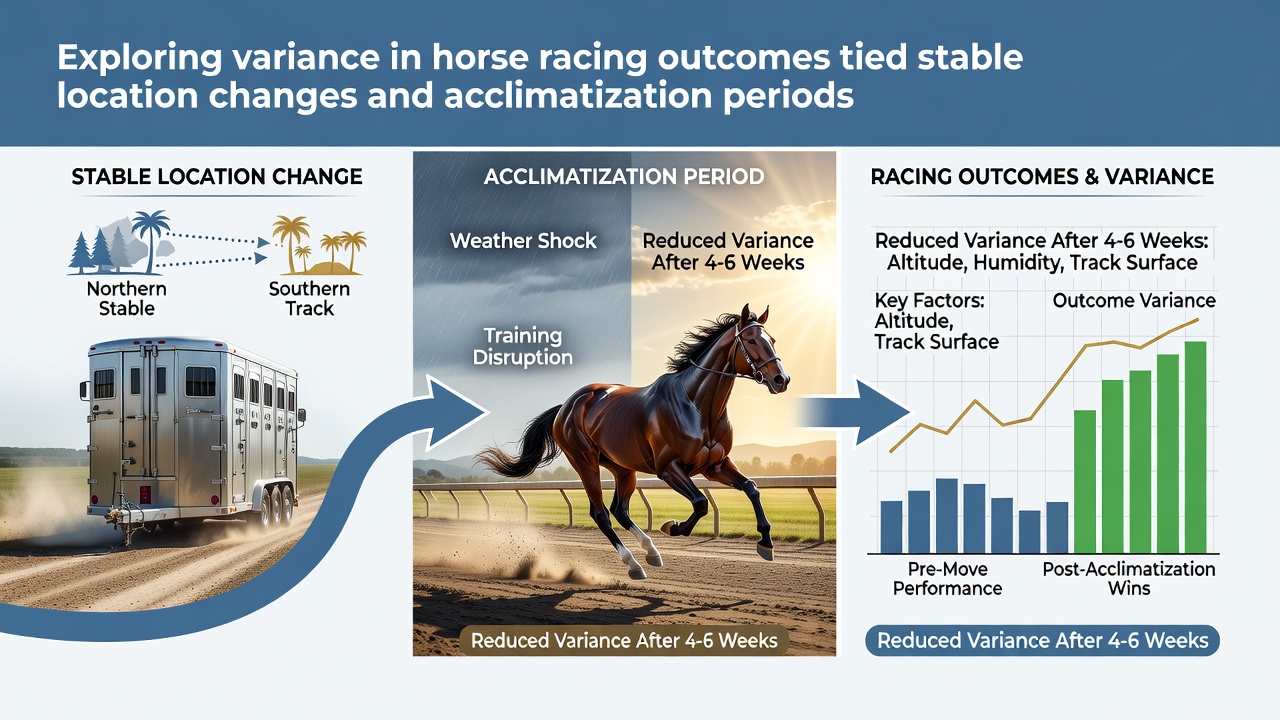
Acclimatization periods typically span four to eight weeks depending on the extent of the change, and studies indicate that horses given at least 28 days before resuming full racing schedules display more consistent sectional times and fewer excuses related to travel fatigue. In July 2026, Racing Australia published updated guidelines recommending minimum rest periods for interstate transfers based on aggregated performance statistics from the previous two years, and these recommendations align with findings from Canadian equine research centers that emphasize hydration management and circadian rhythm realignment during the transition phase.
Regional and Seasonal Influences on Adaptation
Horses moving between hemispheres encounter additional challenges from reversed seasons and daylight patterns, which can extend the time needed for full physiological adjustment. European data compiled by the International Federation of Horseracing Authorities reveals that southern hemisphere imports into northern racing circuits often post improved performances after 35 to 45 days, whereas rapid re-entry within three weeks correlates with higher rates of unplaced finishes. Seasonal temperature swings further modulate outcomes, as horses arriving in summer heat from cooler climates exhibit elevated cortisol levels that gradually normalize alongside improved appetite and coat condition.
One study revealed that trainers who maintain detailed logs of daily feed intake, sleep duration, and work times during the first month post-move achieve more predictable outcomes because they identify early signs of stress before they affect race-day results. Those who've studied this know that small adjustments such as replicating familiar bedding materials or introducing new stable companions gradually reduce behavioral indicators of anxiety that might otherwise translate into slower gate breaks or mid-race hesitation.
Statistical Edges in Betting and Form Analysis
Form students examining past performances now incorporate stable location history into their models, noting that horses with recent yard changes show wider margins of victory or defeat in the immediate follow-up period. Figures from the University of Melbourne equine performance database demonstrate that runners returning after a 42-day acclimatization window achieve strike rates within 3 percent of their established benchmarks, whereas those rushed back earlier display greater volatility in finishing positions. Analysts cross-reference these patterns with official timing data to identify runners whose recent figures may understate true ability once full adaptation occurs.
Practical Monitoring Approaches
Veterinary teams employ wearable sensors to track heart rate variability and GPS data during training sessions, allowing precise measurement of when a relocated horse returns to baseline efficiency. These tools have become standard at major training centers in Australia and North America because they provide objective markers that complement subjective trainer observations. Trainers who integrate such technology report fewer instances of horses underperforming due to undetected travel-related issues, and the resulting datasets feed into larger industry studies that refine acclimatization recommendations over time.
Conclusion
Stable location changes introduce measurable variance into racing outcomes that correlates strongly with the duration and conditions of the acclimatization period. Evidence from multiple geographic sources continues to highlight the value of structured transition protocols, and ongoing research refines understanding of how age, distance, and environmental factors interact during these windows. Industry participants who account for these variables gain clearer perspectives on form interpretation and training management without relying on anecdotal assumptions.