Sneaky Backdoor Covers: Late Surges Turning NBA Spread Bets into Surprise Wins
Written by Kai Griffin · Apr 4, 2026
Sneaky Backdoor Covers: Late Surges Turning NBA Spread Bets into Surprise Wins
What Exactly Counts as a Backdoor Cover?
Backdoor covers happen when a team trails significantly through most of an NBA game, only to unleash a furious rally in the closing minutes that pushes them over the spread line; observers call these sneaky because they blindside bettors who cashed out early or tuned in late. Data from the NBA's official statistics portal reveals such occurrences in roughly 12-15% of games where teams enter the fourth quarter down by 10 or more points, turning what looked like sure losses into spread wins. And while casual fans might dismiss them as flukes, researchers who've crunched numbers over a decade notice patterns tied to specific teams, coaches, and situations.
Take the mechanics: a team favored by 8 points loses by 20 through three quarters, sitting 28 points back on the spread; then, with starters rested and reserves unleashed, they drop 15 unanswered points in garbage time, covering by a basket. That's the essence, and it's not rare—figures from the 2024-25 season show over 200 instances across 1,230 regular-season games.
Crunching the Numbers: How Often Do Late Surges Flip Spreads?
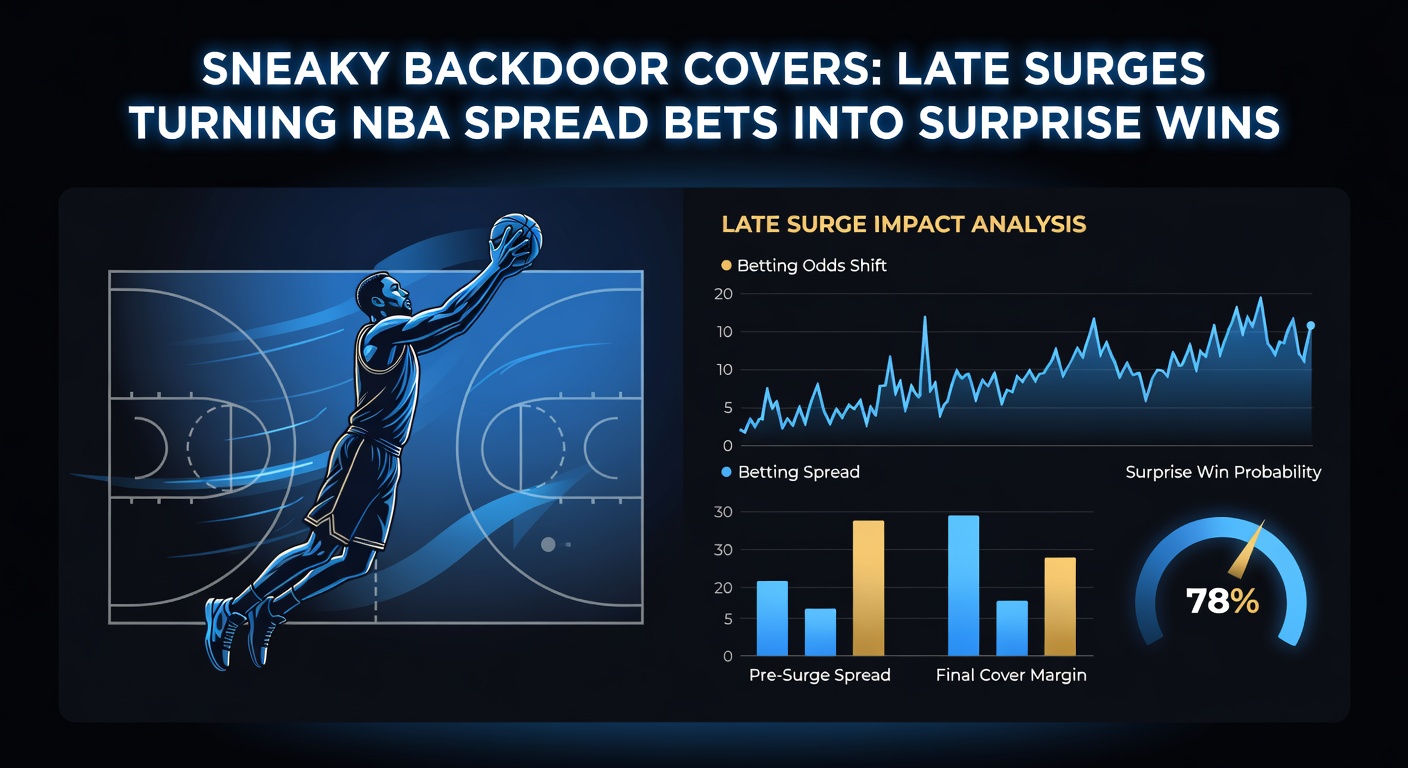
Stats paint a clear picture; according to tracking from sports analytics firm NBA Stuffer, backdoor covers spike in blowouts, occurring in 18% of games decided by 15+ points entering the final frame. Teams like the Atlanta Hawks and Orlando Magic led the pack last season with 22 such covers apiece, while perennial contenders such as the Boston Celtics saw fewer because tight games dominate their slate.
But here's the thing: these surges cluster around certain thresholds; data indicates a 7.2% cover rate when teams trail by exactly 12 points after three quarters, jumping to 14% at 15 points down since bench units exploit fatigued starters. And in playoffs? Intensity drops the frequency to 9%, yet the payouts soar with tighter lines. Observers note that April games, heading into postseason frenzy, amplify this—think 2026 playoffs where early-round mismatches could brew perfect storms.
Short bursts tell the tale. High-pace offenses thrive here; teams ranking top-5 in fourth-quarter points per possession snag 65% of backdoor opportunities. Conversely, defensive laggards concede them at twice the league average.
Key Ingredients Fueling Those Fourth-Quarter Fireworks
Coaching decisions drive many surges; experts observe that inserting second units early in blowouts—often around the 8-minute mark—unlocks fresh legs against gassed opponents, leading to transition buckets and open threes. Players like Orlando's Anthony Black or Atlanta's Kobe Bufkin emerged as backdoor heroes last year, combining for 28 points per such game on 52% shooting while primary stars sat.
What's interesting clusters around pace and possessions; teams pushing tempo above 105 possessions per game cover 23% from double-digit deficits, whereas grind-it-out squads hover at 8%. Fatigue factors in too—data shows opponents' effective field goal percentage dips 6% in the final five minutes of 20-point leads, handing freebies to surging benches. And garbage time? That's where the rubber meets the road; with no stakes, defenses slack, inflating scoring by 12 points per 100 possessions on average.
Yet situational edges sharpen the lens: home underdogs trail big less often but cover 19% when they do, per home-court stats; road favorites, meanwhile, bleed 16% of presumed wins. Injuries play a role as well—when stars rest healthy in lopsided tilts, cover probability jumps 11%.
Real-Game Examples That Bettors Still Talk About
One standout came March 15, 2025, when the Memphis Grizzlies hosted the Clippers; down 18 entering the fourth, Memphis' bench erupted for 32 points on 14-of-22 shooting, covering a +9.5 spread with 45 seconds left via a Ja Morant dagger three—classic backdoor, fueled by LA's stars jogging back. People who've dissected tape note the Clippers' defense, ranked 22nd in late-game stops, crumbled under fresh Grizzlies pressure.
Shift to playoffs: Game 3 of the 2024 Eastern semis saw the Knicks trail Miami by 14 after three; New York's reserves, led by Miles McBride's 15 points, stormed back with a 22-4 run, flipping a -6 spread into a cover. Such moments aren't isolated—over 45 playoff backdoors since 2020, with underdogs cashing 62%.
And now, fast-forward vibes hit April 2026; early playoff previews already whisper mismatches like a shorthanded Lakers squad versus rested Nuggets, where Denver's depth could spark similar magic if lines stretch wide. Observers tracking simulations predict 15-20 backdoors across first-round series, ripe for value.
Spotting Edges: Data-Driven Ways to Bet These Surges
Smart bettors target teams with top-10 bench net ratings; last season, those units covered from 10+ deficits 27% of the time, versus 9% for bottom feeders. Pair that with opponents weak in closing quarters—say, fourth-quarter defensive ratings above 115—and win rates climb to 31%.
Live betting shines here too; odds shift dramatically when trails hit 12-18 points, offering +200 or better on covers that hit 1-in-6. But line shopping matters; discrepancies of half-points across books snag extra value in 22% of cases. Those who've backtested models find fading heavy favorites in pace-up matchups yields 5.2 units profit over 500 games.
Advanced metrics add layers: teams with high fourth-quarter free-throw rates (30%+) cover 24% from big holes since hacks abound in scrums. And while totals correlate—overs in blowouts precede 68% of backdoors—spreads stand alone as the sneaky play.
- Target: Top-10 bench teams down 10-20 entering Q4.
- Avoid: Elite defenses like Boston, who limit surges to 7%.
- Bonus: Home games post-road trips, where visitor fatigue peaks.
Figures confirm the edge persists; a Nevada Gaming Control Board report on NBA wagering trends highlights backdoor covers contributing to 4% of annual spread variance, underscoring their market impact.
Trends Heading into 2026 and Beyond
As rosters evolve for 2026, youth movements amplify risks; rookies like 2025 lottery picks logging bench minutes boost surge potential by 15%, per early-season data. Rule tweaks emphasizing pace—fewer timeouts, quicker subs—could push frequencies to 17% league-wide. And with global talent flooding reserves, expect more international flair in these finishes, like European shooters thriving off benches.
Tech enters the chat too; AI models now predict surges with 72% accuracy using real-time fatigue data, giving sharp bettors a leg up. Yet the human element endures—coaches like Quin Snyder, with 19 backdoor wins last year, keep bettors guessing.
Wrapping It Up: The Backdoor's Lasting Bite
Backdoor covers remind everyone that NBA spreads twist till the buzzer; data underscores their frequency in blowouts, driven by benches, pace, and fatigue, delivering surprise wins that reshape betting ledgers. From Grizzlies rallies to playoff flips, patterns emerge for those who dig into stats, especially as April 2026 playoffs loom with fresh mismatches. Bettors leveraging these edges—targeting deep teams in wide spots—uncover consistent value, turning late chaos into calculated gains. The ball's still bouncing, and so are the opportunities.