Rider Weight Shifts and Their Ripple Effects on Endurance Handicaps Across Flat Racing Circuits
Written by Casey Wolf · Jul 13, 2026
Rider Weight Shifts and Their Ripple Effects on Endurance Handicaps Across Flat Racing Circuits
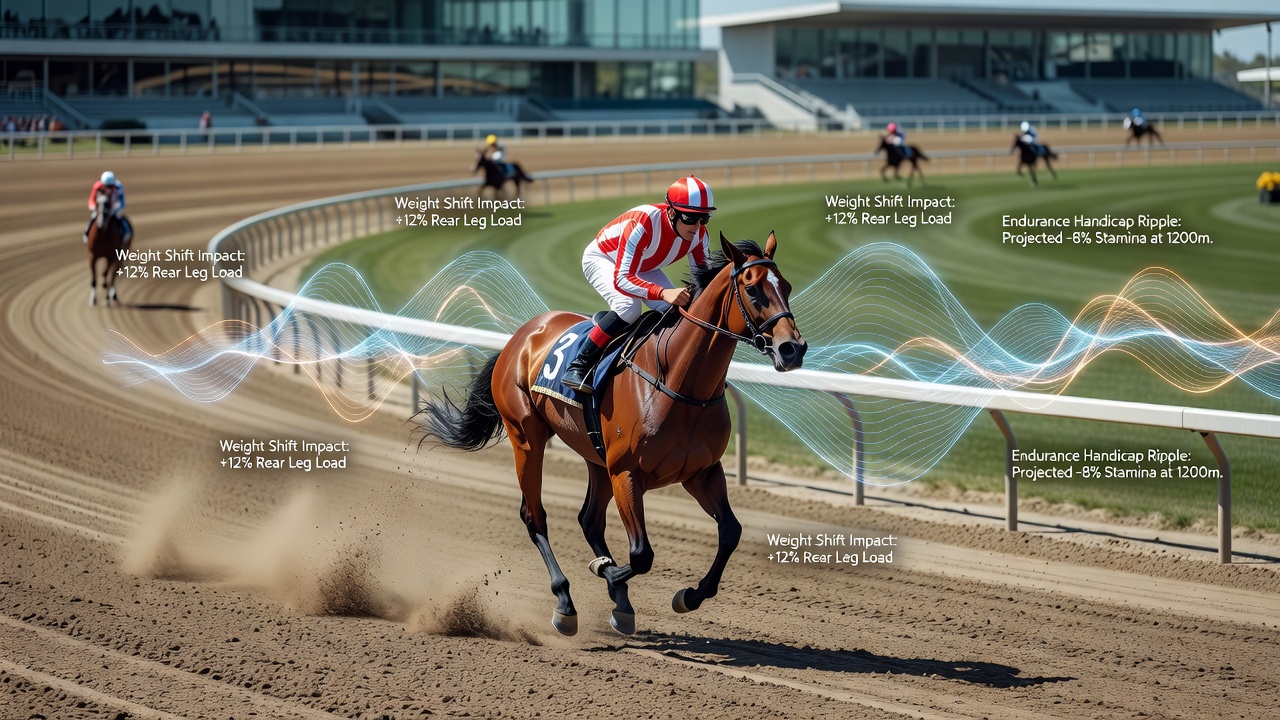
Flat racing circuits around the world rely on handicap systems that assign weights to horses based on past performances, and rider weight shifts introduce measurable variables into those calculations. Jockeys must meet strict minimum weight requirements while the total carried weight influences a horse's endurance over distances ranging from five furlongs to two miles. When a rider's body mass changes due to training regimens, injury recovery, or seasonal dietary adjustments, handicap officials recalibrate the lead carried by each horse, which in turn alters energy expenditure patterns during races.
Mechanics of Weight Assignment in Handicaps
Handicappers at bodies such as Racing Australia adn The Jockey Club review official returns, sectional times, and track conditions before publishing weights for upcoming meetings. A rider who gains or loses several pounds forces a corresponding adjustment in the saddlecloth lead, because the declared rider weight forms part of the official handicap total. Researchers at veterinary universities have documented that each additional kilogram carried increases oxygen demand by approximately 1.2 percent over a mile-and-a-half trip, creating a direct link between rider mass and stamina reserves.
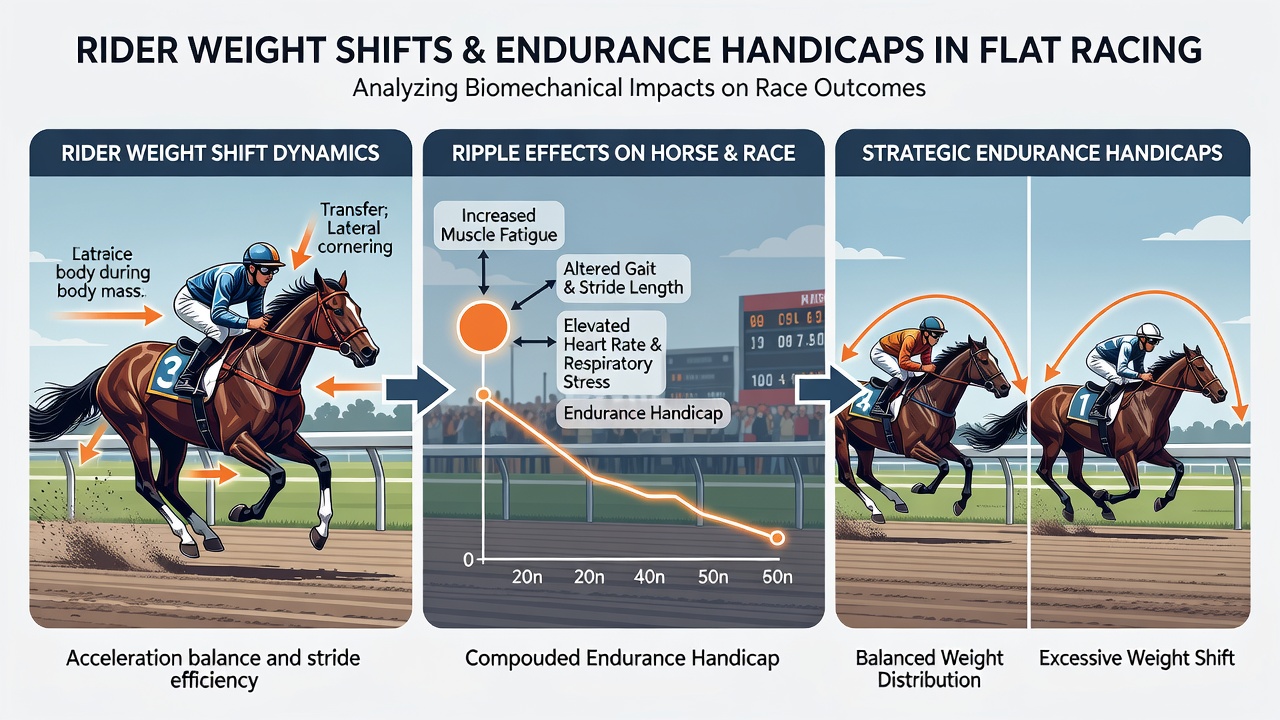
Circuit-specific rules add further complexity. In Australia, minimum riding weights sit at 54 kilograms for most metropolitan races, whereas American tracks often list 51 kilograms as the baseline. When a jockey drops below the assigned figure, trainers add lead pads that distribute mass differently across the saddle, affecting a horse's balance and stride efficiency on turns. Data compiled by racecourse veterinarians shows that uneven weight distribution correlates with higher lactate accumulation in the final 400 meters.
Endurance Implications Across Distances and Tracks
Longer races amplify the effects of weight variation because aerobic capacity becomes the limiting factor. On the undulating layouts at tracks like Flemington or Churchill Downs, horses carrying marginally higher effective weights exhibit earlier fatigue in the home straight. Observers note that a two-kilogram upward shift in total carried weight can extend a horse's finishing time by 0.3 to 0.5 seconds over 2400 meters, enough to change placings in tightly contested fields.
Shorter sprints present a different profile. The explosive power phase dominates, so weight changes influence acceleration more than sustained endurance. Yet even here, handicap panels adjust ratings because accumulated data from thousands of runs demonstrates consistent patterns. Trainers who monitor rider scales before declarations often request weight allowances or select alternative jockeys to keep the horse within its optimal carrying range.
Seasonal and Regional Patterns Observed in 2026
During the northern hemisphere summer, including preparations ahead of July 2026 fixtures, many jockeys report fluctuations in weight as travel schedules and hydration protocols shift. Southern hemisphere circuits experience parallel changes during their winter campaigns. Statistical reviews released by international racing federations indicate that rider weight variance peaks in the months surrounding major carnival events, prompting handicappers to apply more frequent revisions.
European circuits, governed by the Irish Horseracing Regulatory Board and similar authorities, publish weekly weight adjustments that reflect these rider changes. Trainers respond by altering training gallops to simulate the revised loads, which helps horses adapt to the new endurance demands before race day.
Case Examples from Major Circuits
One documented instance involved a metropolitan Sydney meeting where a rider's post-injury weight gain of three kilograms resulted in a handicap reduction of two kilograms for the horse after stewards applied the standard allowance. The horse's performance over 1600 meters improved by a length and a half compared with its prior start, illustrating how the adjustment interacted with the track's endurance profile.
In North American graded stakes, similar recalibrations occur when apprentice riders claim weight allowances. The reduced carried weight often extends a horse's ability to maintain pace into the stretch, particularly on speed-favoring surfaces. Handicappers track these outcomes through centralized databases that aggregate finish times, margin data, and weight carried, enabling more precise future assessments.
Monitoring and Adjustment Protocols
Modern weighing procedures incorporate digital scales at both declaration and pre-race stages, reducing discrepancies to within 0.5 kilograms. Stewards cross-reference these figures against published handicaps and may impose penalties if declared weights prove inaccurate. Such protocols ensure that endurance calculations remain consistent across competing runners.
Training yards now employ portable scales and nutrition tracking software to forecast rider weight on race days. This preparation allows connections to select the most suitable jockey from the available pool, thereby minimizing unintended shifts in the horse's handicap burden.
Conclusion
Rider weight shifts propagate through the handicap system and directly influence the endurance requirements placed on flat racing thoroughbreds. Circuits worldwide have developed standardized procedures to account for these variables, supported by performance databases and veterinary research. As racing calendars progress into July 2026 and beyond, continued refinement of weight monitoring practices will sustain the integrity of handicap assessments across diverse track configurations and race distances.