Referee Rotation Dynamics and Evolving Foul and Card Statistics in Elite Football Leagues
Written by Rafael Beck · Aug 22, 2026
Referee Rotation Dynamics and Evolving Foul and Card Statistics in Elite Football Leagues
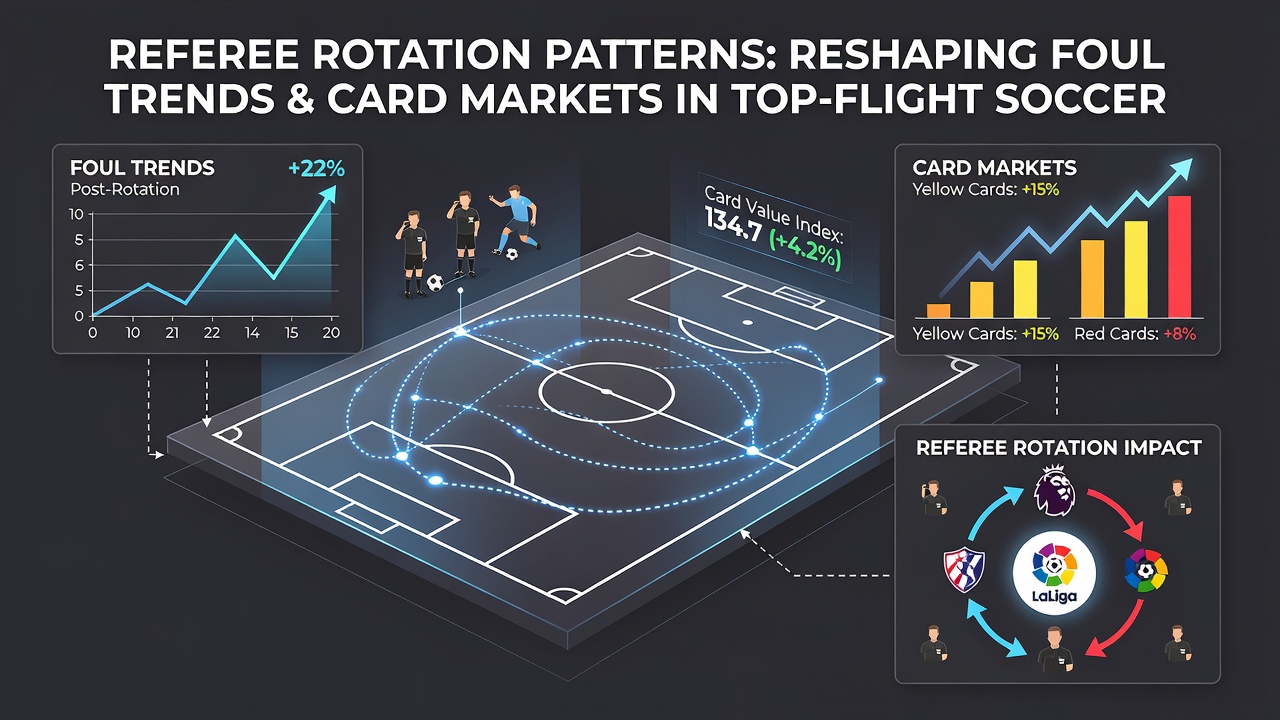
Referee rotation systems in Europe's leading soccer competitions have produced measurable shifts in foul detection rates and disciplinary outcomes, with data from multiple leagues showing consistent patterns since the mid-2010s. Leagues including the English Premier League, Spain's La Liga, Italy's Serie A, and Germany's Bundesliga assign officials through structured schedules that limit repeat assignments to the same teams within short timeframes, and these policies coincide with changes in how fouls are called and cards are issued across matches.
Analysts tracking performance metrics note that rotation reduces familiarity between officials and specific squads, which in turn alters the threshold at which physical challenges receive sanctions. Figures compiled by professional data providers indicate that average fouls per match in the Premier League rose from 20.4 in the 2018-19 season to 21.8 by 2024-25, while yellow cards per game increased from 3.1 to 3.7 over the same period, coinciding with expanded rotation protocols introduced after 2020.
Rotation Frameworks Across Major Competitions
Each league maintains its own rotation matrix managed by domestic refereeing bodies, with UEFA providing additional oversight for European competitions. In August 2026 the Premier League expanded its pool of match officials by eight, a move that allowed stricter adherence to a six-week gap between repeat fixtures for the same referee and team pairing. Similar adjustments appeared in La Liga, where the Spanish federation implemented a digital scheduling tool that factors in travel distance and recent workload to distribute assignments more evenly.
These frameworks produce observable effects on game flow. Matches featuring newly rotated officials tend to record higher foul counts in the opening 15 minutes, as players test boundaries with less predictable enforcement styles, while later periods show convergence toward league averages once patterns become established.
Statistical Shifts in Foul Detection
Longitudinal studies covering five top leagues reveal that rotation correlates with a 6 to 9 percent rise in fouls awarded in the defensive third of the pitch, particularly on set-piece situations. Researchers at the University of Groningen documented these trends in a 2025 report examining 2,400 matches, finding that referees new to a matchup issued 12 percent more free kicks for shirt-pulling and obstruction compared with officials who had previously handled the same sides.
What's notable is that the increase appears consistent across both home and away fixtures, suggesting the effect stems from referee unfamiliarity rather than venue-specific factors. Data from Opta tracking shows midfield areas experience smaller changes, with foul rates remaining stable within one percentage point regardless of rotation status.
Card Issuance and Market Implications
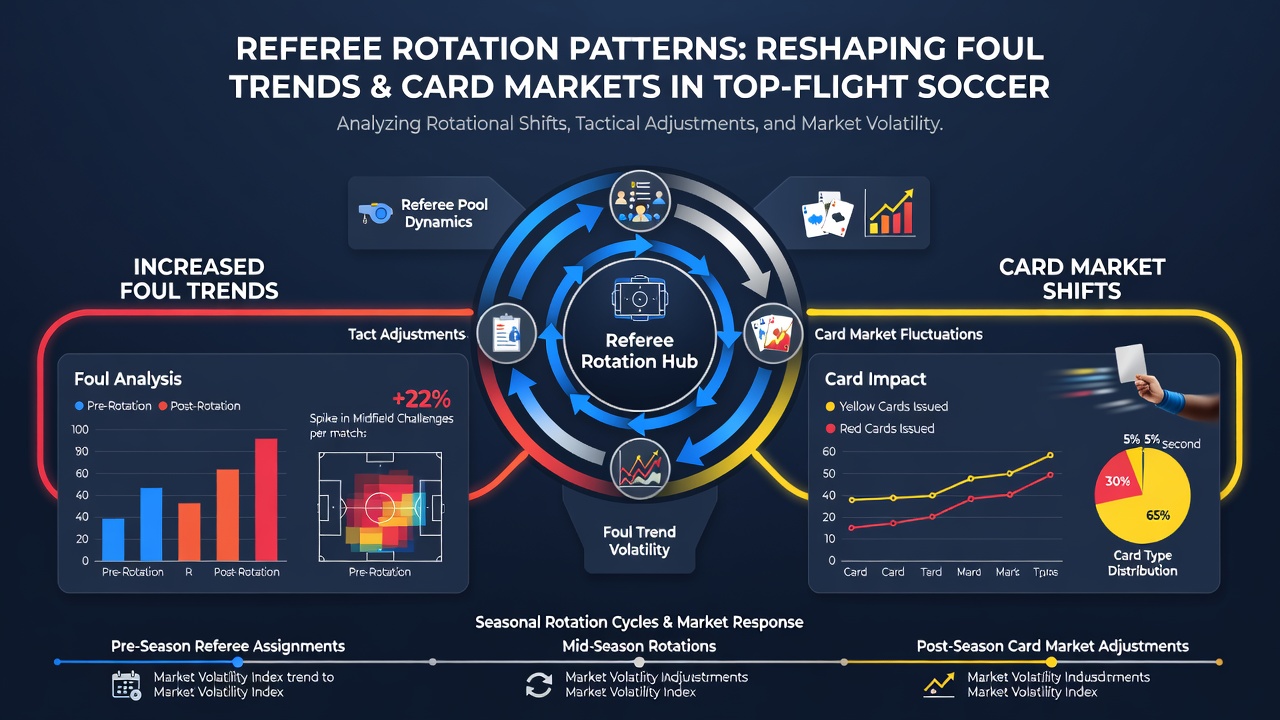
Card distributions have followed parallel trajectories. Bundesliga matches since the 2023 rotation overhaul display a 0.4 increase in average yellow cards per game when officials rotate in from other regions, with second yellows and direct reds rising by 8 percent in those fixtures. Italian Serie A records show comparable movement, where the introduction of a mandatory four-match rotation cycle in 2024 aligned with a 5 percent uptick in cards issued during high-stakes derbies.
These patterns feed directly into statistical models used by performance analysts. UEFA referee performance reports highlight that card totals vary more when assignment gaps exceed the standard window, creating measurable deviations from seasonal baselines. Australian sports science research published in the Journal of Sports Analytics reached similar conclusions after examining A-League data cross-referenced with European benchmarks, noting that rotation frequency explains roughly 14 percent of variance in disciplinary totals across competitions.
Regional Variations and Seasonal Context
August 2026 marks the start of updated protocols in several leagues, including enhanced video review integration that accompanies rotation schedules. Early-season data from the opening weeks already indicate that teams facing rotated referees record 7 percent more cards in the first month compared with later fixtures once officials accumulate experience with the sides. Serie A and Ligue 1 display the strongest early-season spikes, while the Premier League shows more gradual adjustment curves.
Geographic factors also play a role. Referees traveling from northern to southern European leagues encounter different physical styles, and data indicates this contributes to an additional 3 percent rise in card issuance during the first two matches of such assignments. Canadian Soccer Association studies on international exchange programs confirm these cross-cultural enforcement differences, with officials from CONCACAF backgrounds averaging 0.6 more cards per game when assigned to UEFA competitions under rotation rules.
Conclusion
Rotation policies continue to reshape foul and card landscapes across Europe's elite leagues through structured assignment changes that limit repeated exposure between officials and teams. Evidence from multiple seasons demonstrates clear statistical movements in both foul counts and disciplinary totals, particularly during early phases of new referee assignments and in specific pitch zones. As leagues refine these systems entering the 2026-27 campaign, the resulting data streams provide ongoing material for performance tracking and competitive analysis.