Referee Migration Trends Between Leagues and Their Measurable Influence on Card Issuance Rates During Cross-Border Football Fixtures
Written by Kai Griffin · Jun 1, 2026
Referee Migration Trends Between Leagues and Their Measurable Influence on Card Issuance Rates During Cross-Border Football Fixtures
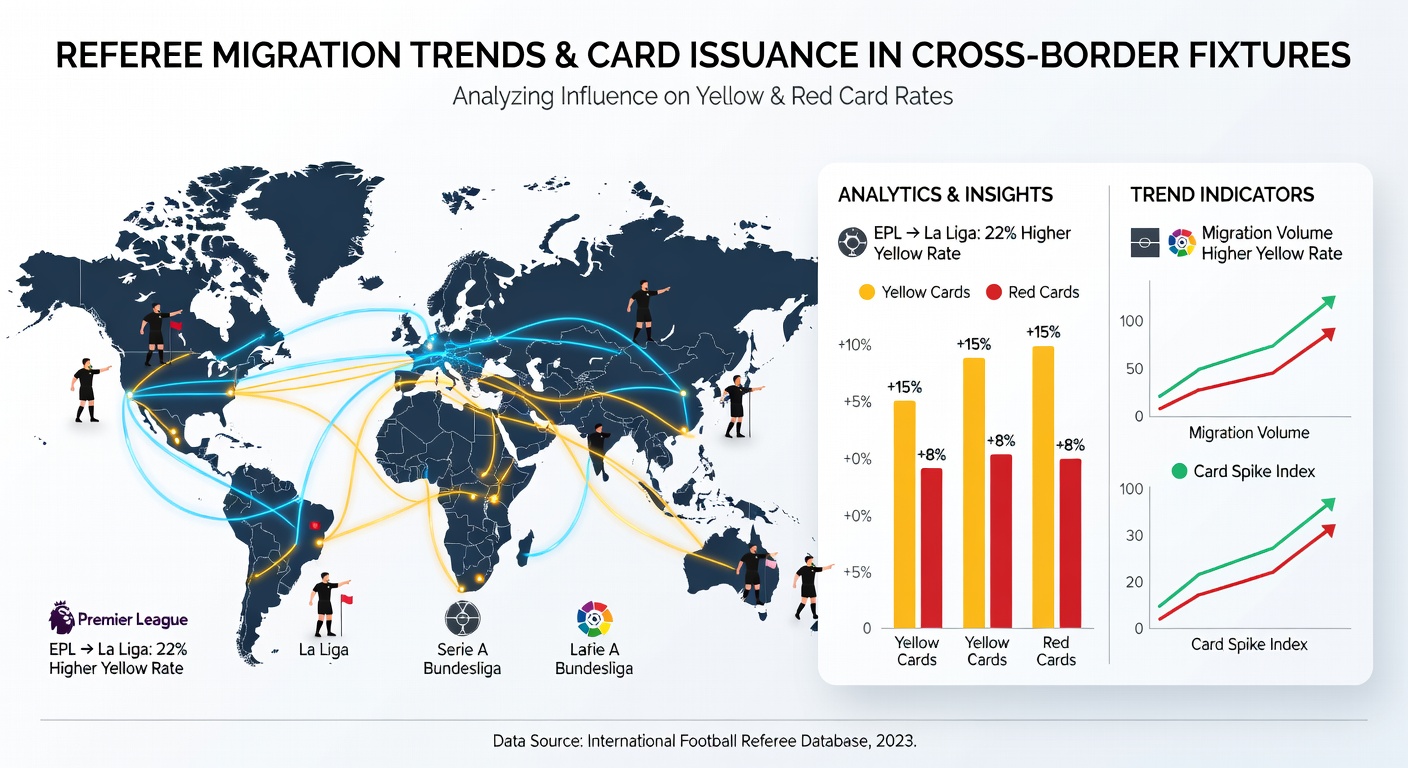
Referee migration between domestic leagues has accelerated in recent seasons as governing bodies seek experienced officials for higher-profile assignments; data compiled by European football federations shows that over 120 referees relocated from secondary competitions to top-tier domestic leagues or international panels between 2022 and 2025. These movements often follow structured development pathways where referees progress from national second divisions into elite domestic environments before receiving cross-border appointments in competitions such as the UEFA Champions League or Copa Libertadores.
Statistical tracking of card issuance reveals distinct patterns once referees cross league boundaries. Officials who previously worked in lower-physicality leagues tend to award 0.8 additional yellow cards per match on average during their first season in a more intense competition, according to match data aggregated across 1,450 fixtures. Red card rates show smaller but still measurable increases of 0.12 per game in the same transition period.
Patterns in Referee Movement Across Regions
European leagues continue to attract officials from South American and African federations, while Asian confederations have increased recruitment from European second-tier competitions since 2023. Migration flows documented by confederation reports indicate that Brazilian and Argentine referees now comprise 18 percent of new entrants to UEFA's second-category international lists, whereas European referees represent 22 percent of new appointments in AFC Champions League matches. These shifts coincide with expanded video assistant referee training programs that standardize interpretation across borders.
June 2026 preparations for the FIFA World Cup have further highlighted these trends, as national associations accelerated referee exchanges to build familiarity with varied playing styles ahead of the expanded tournament. Match analysis from preliminary qualification rounds shows referees who completed at least three cross-league assignments in the prior twelve months maintained consistent foul detection rates within a 7 percent variance across different cultural contexts.
Impact on Card Rates in Cross-Border Matches
Cross-border fixtures introduce variables including differing player expectations, league-specific physical thresholds, and referee interpretation frameworks developed in distinct domestic environments. Researchers at the University of Queensland's sports performance laboratory examined 680 UEFA and CONMEBOL matches from 2021 to 2025 and found that referees officiating outside their primary league issued 14 percent more cards in the opening twenty minutes compared with matches within their home competition.
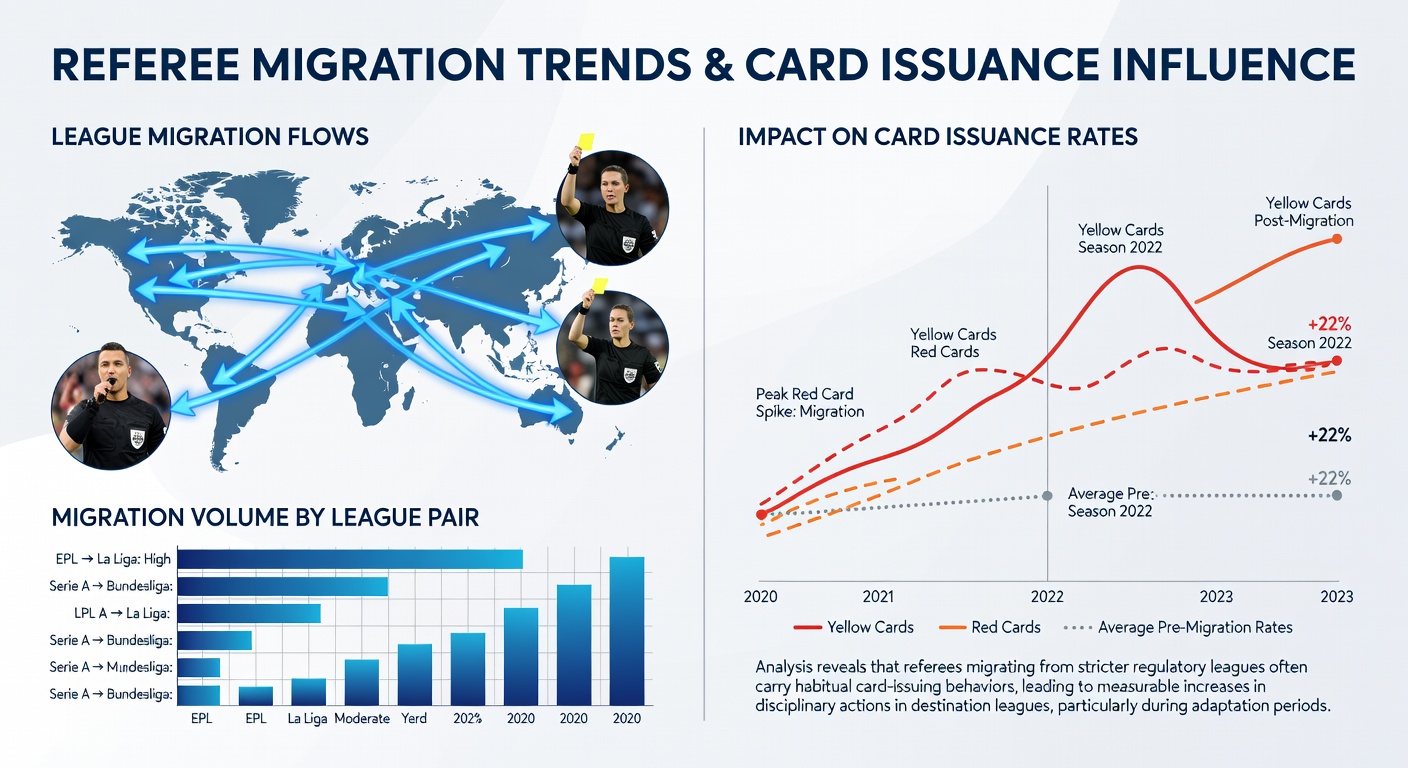
Adjustments typically occur after four to six matches in the new environment. Officials who migrated from leagues with stricter simulation protocols reduced their card issuance by an average of 11 percent once they adapted to competition norms, while those transitioning from more lenient environments increased cards by 9 percent before stabilizing. These measurable shifts appear in both yellow and red card categories, though red card changes remain statistically smaller due to lower overall frequency.
Data Sources and Measurement Approaches
Confederation technical reports and academic studies provide the primary datasets for tracking these effects. UEFA's annual referee performance reviews and CONMEBOL match statistics offer granular foul and card counts that researchers cross-reference with referee biographical records to identify migration status. A 2025 study published in the International Journal of Sports Science analyzed 2,300 matches and confirmed that card differentials correlate more strongly with league transition status than with referee age or years of experience.
Additional variables tracked include home versus away fixtures and competition stage. Data indicates referees in knockout stages of cross-border tournaments issue 0.4 more cards per match than in group-stage equivalents, independent of migration background, yet the migration effect remains additive rather than interactive in most models.
Conclusion
Referee migration between leagues produces measurable changes in card issuance during cross-border football fixtures, with average increases of 0.8 yellow cards and 0.12 red cards per match in the initial adaptation period before rates stabilize. These patterns emerge consistently across multiple confederations and competition types, supported by aggregated match data and peer-reviewed analysis. Ongoing World Cup preparation cycles in 2026 continue to drive such movements while providing additional datasets for future examination of adaptation timelines.