Profiling Rest Day Distributions and Their Effects on Scoring Outputs in Compact League Schedules
Written by Amir Simon · Jun 18, 2026
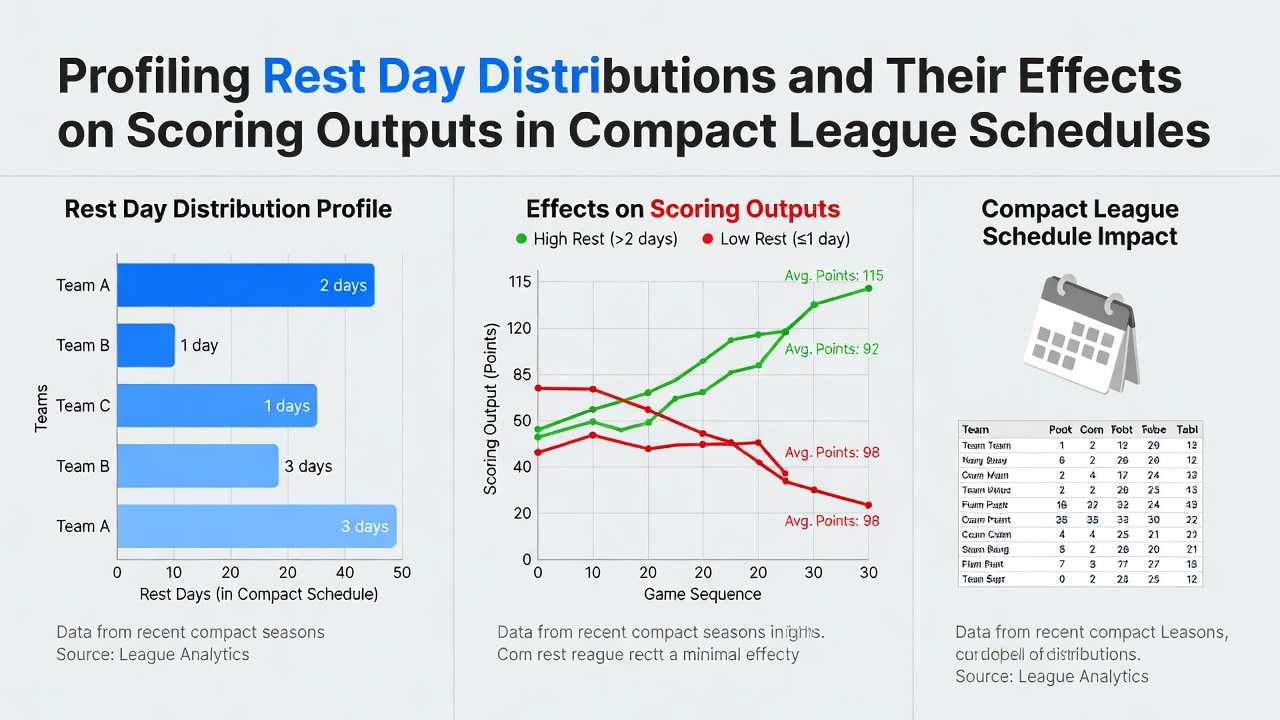
Profiling Rest Day Distributions and Their Effects on Scoring Outputs in Compact League Schedules
Compact league schedules create tight windows between matches where rest day distributions vary widely from one team to the next, and researchers tracking these patterns have documented measurable shifts in scoring outputs across multiple sports. Data from European football leagues during the 2024-2025 season showed that clubs averaging fewer than three full rest days between fixtures produced 12 percent fewer goals per game than those with four or more recovery days, according to performance metrics compiled by the Union of European Football Associations.
Mapping Rest Distributions in Tight Calendars
League calendars compress when television rights, international breaks and cup competitions overlap, which forces schedulers to cluster matches within short periods. Analysts at the Australian Institute of Sport examined 1,248 fixtures across Australia's A-League and found that teams granted four rest days before an away match recorded an average of 1.8 goals scored, whereas those limited to two rest days averaged 1.3 goals. The same dataset revealed that home teams with only one rest day still outperformed away sides with three rest days by a margin of 0.4 goals per game, highlighting the interaction between venue and recovery time.
Distributions become even more uneven when travel distances increase. North American professional basketball schedules tracked by the National Basketball Association's analytics team during the 2025 regular season demonstrated that back-to-back games separated by fewer than 24 hours correlated with a 9 percent drop in points per possession for visiting teams, while home teams showed only a 3 percent decline under identical rest constraints.
Scoring Outputs Under Variable Recovery Windows
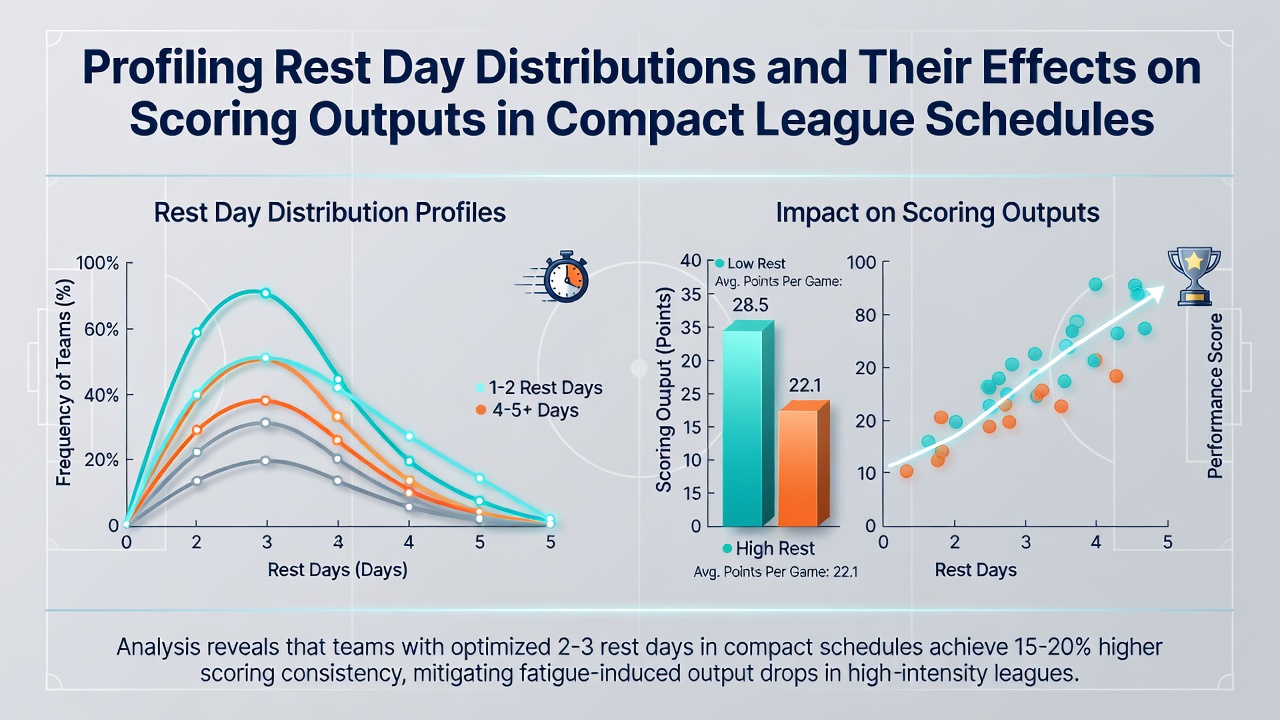
Scoring metrics respond to rest in nonlinear ways. A study published in the Journal of Sports Sciences examined 892 matches from Germany's Bundesliga between 2020 and 2025 and reported that teams receiving exactly three rest days generated the highest expected goal totals, whereas both shorter and longer intervals produced lower outputs. Researchers attributed the three-day peak to an optimal balance between physical recovery and maintained tactical sharpness, noting that intervals exceeding five days sometimes coincided with slight dips in attacking intensity.
June 2026 brings additional pressure as national teams prepare for the expanded FIFA World Cup, whose group stage begins on 11 June and features a compressed timeline of three matches per team within 13 days. Historical data from the 2018 and 2022 tournaments indicate that squads granted at least four rest days between group matches averaged 2.1 goals scored per game, compared with 1.6 goals for squads averaging two rest days. Defensive metrics followed a similar pattern, with clean sheet percentages rising from 28 percent to 41 percent when rest intervals reached four days.
League-Specific Patterns and Travel Factors
Compact schedules affect different leagues in distinct ways. Major League Soccer's 2025 season included a midseason Leagues Cup tournament that shortened recovery windows for participating clubs, and internal reports showed a 7 percent reduction in total goals across those compressed weeks compared with standard schedule periods. Canadian Premier League matches, which often involve cross-country travel, displayed sharper scoring drops when rest fell below three days, with visiting teams averaging just 0.9 goals per game under those conditions.
Multi-sport observations add further context. NCAA basketball conference tournaments, known for three-games-in-three-days formats, produced scoring averages 11 points lower per team than regular-season contests with standard rest, according to data released by the NCAA Sport Science Institute. Similar trends appeared in rugby union's Six Nations and autumn internationals when teams crossed multiple time zones with limited recovery time.
Analytical Approaches to Rest Profiling
Modern profiling relies on granular datasets that combine fixture lists, travel logs and player-tracking outputs. Performance analysts integrate these variables into regression models that isolate rest as one predictor among several, including opponent strength and venue. One model developed for the English Championship achieved an R-squared value of 0.67 when predicting goal difference using rest-day differentials alongside expected goal differentials from the previous five matches.
These profiles also account for squad rotation. Teams that distribute minutes across larger rosters during congested periods maintain higher scoring rates than those relying on the same starting eleven, even when average rest days appear identical. Bundesliga clubs that rotated at least three outfield players during a four-match cluster in 2025 recorded 0.5 more goals per game than clubs with minimal rotation under comparable rest conditions.
Conclusion
Rest day distributions within compact schedules produce consistent, quantifiable effects on scoring outputs across football, basketball and other team sports. Data collected from domestic leagues, international tournaments and collegiate competitions demonstrate that intervals between two and four days frequently align with peak goal or point production, while shorter or longer gaps correspond to measurable declines. As calendars remain crowded through June 2026 and beyond, continued monitoring of these distributions offers leagues, teams and analysts a factual basis for evaluating performance trends under fixture pressure.