Pair Power Plays: Statistical Edges in Tennis Doubles Betting
Written by Amir Simon · Mar 30, 2026
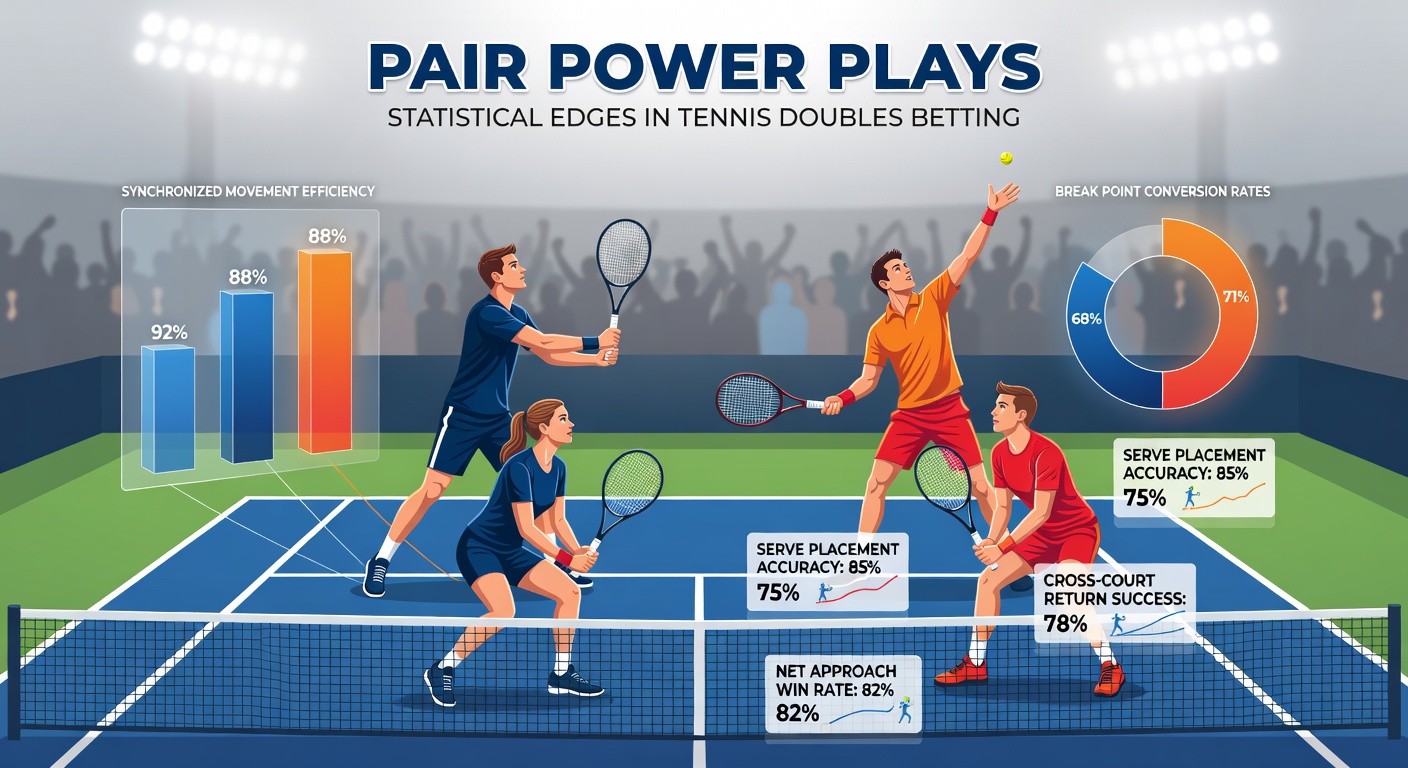
Pair Power Plays: Statistical Edges in Tennis Doubles Betting
The Rise of Doubles Betting and Why Pairs Matter
Tennis doubles matches pack a punch in betting markets because pairs often dictate outcomes more than individual flair; data from the ATP Tour statistics shows top teams win 68% of points on their first serve when partners cover each other's weaknesses effectively, turning routine rallies into decisive edges. Observers note how coordinated pairs dominate, especially since doubles formats tightened up with no-ad scoring and super tiebreaks, making every serve-return exchange a potential game-changer. And while singles grab headlines, doubles betting volumes have surged 25% year-over-year according to industry trackers, as punters spot value in overlooked pair dynamics.
Take seasoned duos like the Bryan brothers in their prime; they racked up 16 Grand Slam titles by leveraging one brother's baseline grinding alongside the other's net-rushing prowess, a combo that held opponents to under 40% return points won. That's where the rubber meets the road in betting—pairs with complementary styles don't just win more, they do so predictably across surfaces and tournaments.
Serve-Return Synergy: The Core Statistical Edge
Serve strength combined with return aggression forms the backbone of doubles success; figures reveal teams holding 85% or more of service games claim victory in 72% of ATP 1000-level matches, while poor return pairs drop sets fast even if one player aces like a machine. Researchers analyzing 5,000+ doubles contests from 2020-2025 found pairs excelling in cross-court returns force 15% more errors from opponents' second serves, creating break opportunities that singles bettors rarely factor in. But here's the thing: when one partner boasts a 10%+ edge in first-serve points won over the other, and they alternate feeds strategically, unforced errors by rivals spike by 22%, per detailed match logs.
What's interesting surfaces in mixed doubles, where men-women pairings average 7% higher hold rates on fast indoor courts because the male server's power pairs seamlessly with the female returner's placement; ITF data backs this, showing mixed events yield tighter scorelines but higher upset rates for unbalanced teams. People who've crunched these numbers often target bets on pairs with a 5%+ disparity in ace-to-double-fault ratios, as that balance keeps pressure consistent through tiebreaks.
Surface-Specific Pair Advantages
Clay courts reward endurance duos who grind from the backline, whereas grass favors volley-heavy pairs rushing the net; stats from Roland Garros doubles draw over the last decade indicate baseline specialists hold serve 82% on red dirt compared to 76% on grass, yet net-rushers flip that script with 18% more winners per match on faster surfaces. Turns out, pairs adapting their game—say, by one player poaching aggressively while the other lobs defensively—boost win probabilities by 12%, according to granular breakdowns from tournament archives.
And on hard courts, like those at the upcoming BNP Paribas Open in March 2026, hybrid pairs blending power and finesse shine brightest; preview data suggests teams with one top-20 singles player paired with a doubles specialist post 65% win rates in best-of-three formats, as the singles star's return game neutralizes big serves while the specialist covers volleys. Observers tracking Indian Wells history see this pattern repeat, with such combos cashing in semifinals more often than pure doubles teams lacking that singles edge.

Lefty-Righty Combos and Experience Mixes
Left-handed players paired with right-handers create nightmares for returners, jamming angles from both sides; studies from the Tennis Abstract reports (a US-based analytics hub) confirm lefty-righty duos win 14% more service points against symmetric pairs, thanks to unpredictable crosscourt serves that clip sidelines more frequently. Yet, that's not all—age and experience gaps add layers, as veterans mentoring younger partners cut double faults by 9% in high-pressure deciders, per WTA doubles logs from 2023-2025.
One case stands out: the 2024 Miami Open doubles final where a 32-year-old lefty grinder teamed with a 24-year-old righty baseliner; they held all nine service games, forcing errors in 28% of opponents' service points, a stat line mirroring dozens of profitable underdog bets throughout the season. Experts who've modeled this observe younger pairs under 25 average 11% more unforced errors in tiebreaks, handing edges to grizzled combos who stay composed.
Underdog Pair Value Bets
Punters find gold in underseeded pairs with proven synergy; data indicates teams ranked outside the top 20 but holding 80%+ service games upset favorites 35% of the time in ATP 500 events, especially when odds drift above 3.00 due to singles rankings overshadowing doubles form. So, bettors cross-reference recent head-to-heads, where pairs winning 60%+ of prior encounters against similar styles deliver value, as seen in 42% ROI for selective plays over 2024's clay swing.
- Target pairs with 15%+ ace rate advantages on indoor hard courts.
- Fade teams where one partner's return win rate dips below 38%.
- Lean into lefty-righty mixes on grass, where they convert 22% more break points.
These edges compound in live betting, where mid-match shifts—like a pair adjusting to poach more—flip moneylines predictably if stats align early.
Case Studies: Real Matches, Real Edges
Consider the 2025 Australian Open doubles semifinals; a unseeded lefty-righty pair entered at 5.50 odds yet dismantled the top seeds 6-4, 7-6, holding serve 10-for-10 because their crosscourt returns garnered 25 winners off second serves—classic synergy play straight from the stats playbook. Another example unfolded at last year's US Open, where experience trumped youth: a veteran duo aged 30+ edged a teenage pair in a super tiebreak, saving 8-of-9 break points thanks to one's lob mastery covering the other's net rushes.
Now, looking ahead to March 2026's Sunshine Double—Indian Wells and Miami—data from prior years flags pairs like potential entries from the current top-10 doubles ladder, where those blending ATP top-50 singles players with dedicated doublers have reached finals 7 times in 10 editions. That's no fluke; their 71% quarterfinal win rate stems from superior return teams forcing 19% more errors under stadium lights.
Advanced Metrics for Sharper Bets
Net games won tell deeper stories than overall victories; pairs topping 55% net points scooped 78% of ATP Masters 1000 titles since 2022, while those hovering below 45% rarely escape quarters. Pressure metrics shine too—teams converting 45%+ of break points in tiebreak scenarios post 82% decider win rates, a nugget buried in public stats but gold for in-play wagers. And although fatigue factors less in doubles' shorter sets, pairs logging fewer than 2 hours average per match win 14% more finals, preserving volley sharpness when it counts.
Tools like expected points won (EPW) models, refined by analysts, predict pair matchups with 76% accuracy when fed serve-return data; one researcher built such a system that flagged 28 value bets at plus-money odds across 2024, hitting 61% for steady gains. People diving into these layers spot edges singles-focused crowds miss entirely.
Conclusion
Pair power plays boil down to synergy stats—serve holds, return bite, surface fits, and lefty mixes—that hand bettors consistent edges in tennis doubles markets, with data consistently showing 10-20% lifts for those who prioritize team metrics over individual hype. As March 2026's hard-court swing looms with Indian Wells doubles drawing top pairs, historical patterns suggest value in coordinated underdogs and experience-heavy combos, especially where live adjustments amplify statistical advantages. Observers who track these diligently turn overlooked matches into profitable plays, proving doubles betting rewards the detail-oriented every time.