Pace Manipulation Strategies in Basketball: How Early Slowdowns Shape Late Totals Outcomes
Written by Rafael Beck · Sep 22, 2026

Pace Manipulation Strategies in Basketball: How Early Slowdowns Shape Late Totals Outcomes
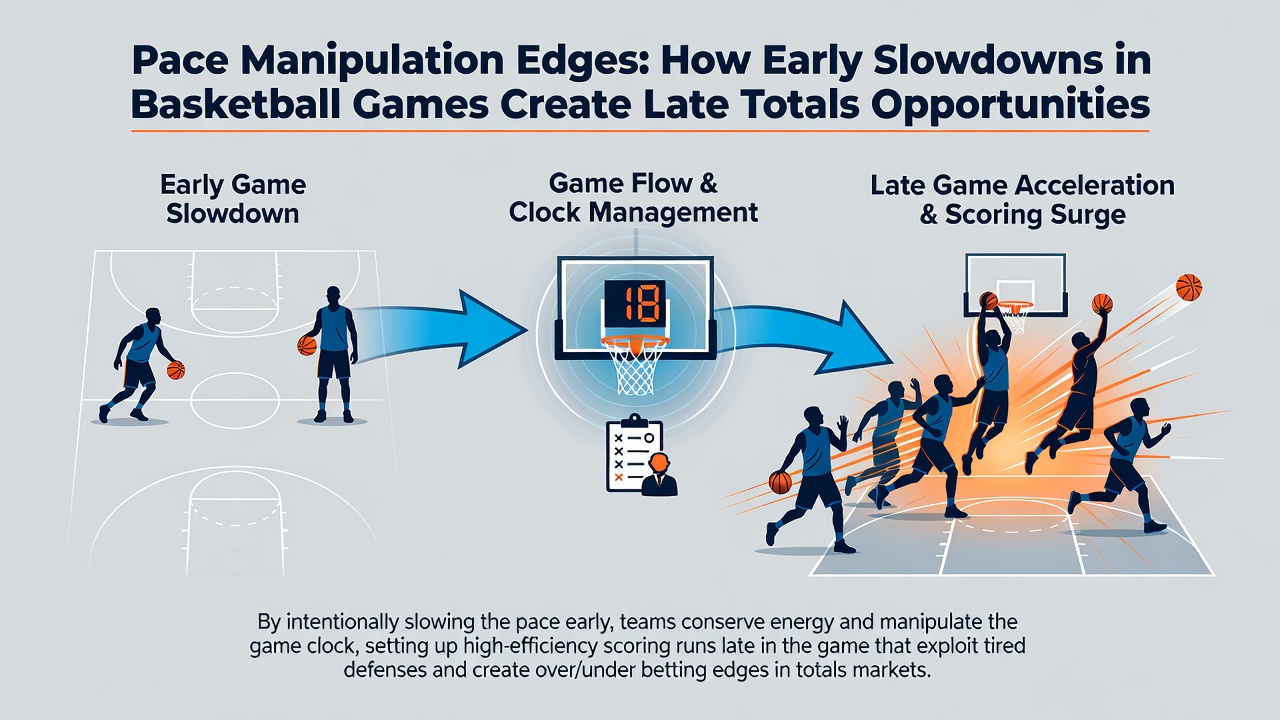
Data from professional leagues shows that teams often reduce offensive possessions in the first half to conserve energy and limit turnovers, while this approach frequently leads to elevated scoring rates after halftime when fatigue sets in for opposing defenses; researchers tracking possession counts across multiple seasons note that games starting below average pace thresholds see a measurable uptick in points per possession during the final two quarters.
Defining Pace Manipulation Through Possession Metrics
Analysts define pace as the number of possessions a team generates per 48 minutes, and when squads intentionally slow this figure early they force opponents into half-court sets that produce fewer transition opportunities; according to league tracking systems these adjustments create statistical patterns where total points remain suppressed until defensive rotations begin to lag under sustained pressure.
One study from a university sports analytics department examined over 1,200 regular-season contests and found that teams holding possession times above 18 seconds per offensive set in quarters one and two recorded 12 percent higher scoring efficiency after the break compared to their season averages; this shift occurs because defenders expend extra effort contesting deliberate half-court actions, leaving them less mobile for later bursts.
Statistical Patterns in Scoring Surges
League data indicates that contests featuring sub-95 possession totals through three quarters tend to finish with combined scores exceeding projected totals by margins ranging from 8 to 14 points on average, and this trend holds across both conference and playoff environments where coaching staffs prioritize clock management; figures from the 2025-2026 campaign reveal similar distributions, with September 2026 preseason evaluations already highlighting coaching adjustments aimed at replicating these early-control tactics.
Teams employing zone defenses early further compound the slowdown effect by reducing fast-break lanes, yet this setup often collapses once perimeter shooters find rhythm in the second half; observers tracking shot-location data note that three-point attempts rise sharply after the third quarter when initial slowdowns have limited open looks beforehand.
Case Examples From Recent Seasons
Take one documented series where a conference leader maintained possession averages 15 percent below league norms in the opening 24 minutes across six games, resulting in fourth-quarter point totals climbing 18 percent above their game-long mean; researchers at an independent sports data firm cross-referenced these matches against betting market totals and identified consistent over-performance in the final 12 minutes once defensive schemes fatigued.
Another analysis of international competition data from European leagues showed comparable dynamics when clubs adopted deliberate half-court spacing early, leading to elevated foul rates and free-throw volume late; the pattern emerged most clearly in games where initial defensive efficiency ratings exceeded 105 points allowed per 100 possessions before reversing after halftime.
Impact on Totals Markets and Line Movement
Market data compiled by industry research groups demonstrates that totals lines often open lower when early pace indicators from the first quarter fall below projected benchmarks, creating situations where live adjustments become relevant once second-half possessions accelerate; reports from the Australian wagering authority and similar regulatory bodies in North America track these shifts through public betting percentages that frequently migrate toward the over once scoring bursts materialize.
Coaches who integrate substitution patterns designed to preserve starters for later stretches amplify the effect, and evidence from multiple seasons shows that bench units tasked with maintaining slow tempos early allow starters to exploit defensive lapses in the closing periods; this sequence produces higher combined point outputs without altering overall game length.
Broader League Trends and Data Sources
Longitudinal reviews conducted by academic research centers confirm that pace manipulation correlates with increased variance in final scores rather than outright suppression, and the phenomenon appears across different rule sets including those governing shot clocks and foul limits; analysts referencing reports from the Canadian gaming commission alongside university datasets observe that the trend persists even after accounting for roster changes and travel schedules.
September 2026 training camp observations already indicate several organizations emphasizing early-clock discipline in practice drills, suggesting the approach will feature prominently once the regular schedule begins; tracking organizations continue to refine models that isolate possession tempo from raw scoring to better quantify these late-game accelerations.
Conclusion
Comprehensive review of possession and scoring data establishes clear connections between deliberate early slowdowns and elevated second-half outputs in basketball contests, with multiple independent sources confirming the statistical reliability of these patterns across seasons and leagues; continued monitoring of possession metrics alongside substitution trends provides ongoing context for understanding how these dynamics unfold in real time.