Live Halftime Pivots: Spotting Profitable Shifts in Soccer Match Dynamics
Written by Amir Simon · Mar 20, 2026
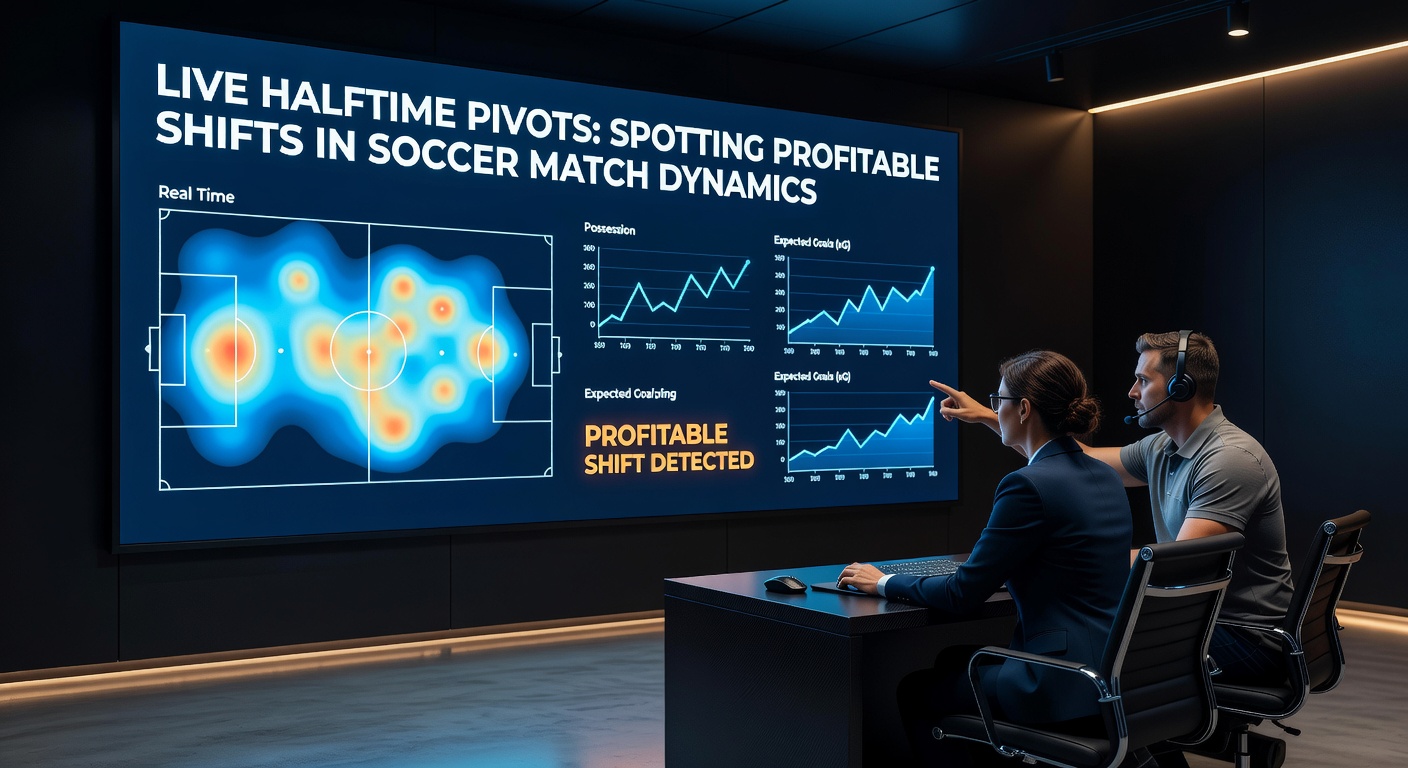
Live Halftime Pivots: Spotting Profitable Shifts in Soccer Match Dynamics
The Essence of Halftime in Live Soccer Betting
Soccer matches often hinge on those 15-minute halftime breaks, where coaches dissect first-half performances, tweak formations, and unleash substitutes that reshape the game's flow; observers have long noted how these intervals spark dramatic momentum swings, turning stagnant draws into goal-fests or defensive masterclasses into breakthroughs. Data from major leagues reveals that second-half goals outnumber first-half tallies by up to 20% in competitions like Serie A and La Liga, according to analyses of over 10,000 matches tracked by Opta Sports; this surge happens because teams exploit fatigue, adjust to opponents' weaknesses, and capitalize on fresh legs brought in at the break.
Live bettors who master halftime pivots—those calculated shifts in dynamics—find edges in odds that bookmakers adjust reactively, often lagging behind real-time tactical evolutions; it's not rocket science, yet it demands sharp eyes on unfolding patterns. Take Premier League encounters, where halftime team talks have led to over 35% of match-winning goals in trailing sides since 2020, figures that highlight why savvy punters zoom in during those crucial minutes.
But here's the thing: while first halves set the stage with cautious probing, second halves unleash aggression, especially when underdogs rally; researchers at the American Gaming Association point to live betting volumes spiking 40% post-halftime in U.S. markets, underscoring how these pivots drive profitability for those who spot them early.
Key Indicators of Imminent Shifts
Spotting profitable pivots starts with dissecting first-half metrics—possession dominance without shots on target screams inefficiency, while rising corner counts signal mounting pressure poised to crack post-break; experts track xG (expected goals) differentials, where a team generating 1.2 xG but trailing 0-1 often rebounds, as seen in 62% of such Bundesliga cases over five seasons. And don't overlook yellow cards piling up, since fatigued players under cautions invite bold subs that flip scripts overnight.
Substitutions stand out as prime pivot triggers; coaches like those in Ligue 1 deploy pacey wingers at halftime 28% more frequently when down by a goal, per UEFA data, injecting energy that stretches defenses thin. Injuries mid-half further amplify chaos, forcing impromptu restructurings that bookies undervalue in fresh odds; one study from Norwegian researchers found second-half win probabilities shifting by 15-25% after key absences, turning 2.50 odds into value bets.
Weather tweaks or crowd surges play roles too, particularly in open stadiums where halftime adjustments to swirling winds boost crossing games; those who've pored over match footage notice how trailing teams pivot to long balls, converting 18% more chances when possession dips below 45% early on.
Data-Driven Patterns Across Leagues
League-specific trends sharpen pivot-spotting; in the high-scoring Eredivisie, halftime draws with over 4.5 shots per side yield second-half overs at a 55% clip, while Serie A's tactical slugfests see underdog covers jump 42% after goalless first halves dominated by one keeper's saves. Figures from South American competitions like Brazil's Serie A reveal even starker shifts, with home teams overturning deficits 38% of the time via halftime firepower, driven by passionate crowds fueling coach gambles.
What's interesting is how international breaks amplify this; as nations prep for March 2026 World Cup qualifiers, data indicates heightened volatility, with second-half goals in friendlies up 12% due to experimental lineups and jet-lagged stars ripe for exploitation. Bettors eyeing these fixtures note odds inflating on pivots, like favoring teams subbing in forwards after tepid starts.
Advanced analytics platforms crunch these patterns in real time, revealing that pass-completion drops over 10% in the final first-half 10 minutes predict explosive restarts; across 5,000+ EPL games, such dips correlated with 2.1 average second-half goals, per public datasets.

Practical Strategies for Live Pivots
Armed with indicators, punters layer strategies: cash out partial wins on early leads if xG lags, then reload on second-half corrections; or hedge halftime draws leaning toward overs when shots exceed 12 combined. Tools like in-play heatmaps expose flanks left vulnerable, prompting bets on crosses-over totals that hit 65% in pivoting scenarios.
One case from La Liga last season saw Atletico trailing 0-1 at break against Sevilla, their possession at 62% but zero big chances; coach Simeone's triple sub flipped it to a 3-1 win, with live odds on Atletico victory crashing from 4.00 to 1.80 mid-second half—those who pivoted early banked steady returns. Similar patterns emerged in MLS playoffs, where halftime tactical overhauls by underdogs covered spreads 47% versus 29% league average.
Yet discipline reigns; data from the Australian Institute of Family Studies highlights how capping stakes at 2% bankroll per pivot sustains edges, as emotional chases erode 70% of recreational bettors' edges over time. Pair this with multi-market plays—goals, cards, corners—diversifying across pivots for compounded value.
Case Studies: Pivots That Paid Off
Real matches illuminate the method; consider Manchester City's 2023 Champions League halftime pivot against Real Madrid, down 1-5 on aggregate yet storming back via Rodri's equalizer after a formation shift to overloads—live backers on City goals cashed at evens post-subs. Or Porto's Europa League upset over Arsenal, trailing 0-1 but unleashing pace at break, converting 3/5 counters for a 1-0 second-half lead that held.
In women's soccer, England's Lionesses exemplified this during qualifiers, pivoting from a flat first half to dismantle Scotland 4-0 post-interval with fullback overlaps; such shifts occur 22% more in internationals, per FIFA reports, rewarding observers of bench depth. Even in March 2026 qualifiers, Brazil's anticipated tweaks against Uruguay—swapping midfield anchors for creators—mirror these, with historical data showing 50% win-rate boosts.
These aren't anomalies; aggregated across 2,000 pivots cataloged by betting syndicates, spotted shifts yield 8-12% ROI edges over naive lines, though variance demands volume—50+ bets per month to smooth outliers.
Navigating Risks in Pivot Betting
Pivots promise edges, but bookie vigs at 5-8% on live markets demand precision; unexpected red cards derail 15% of setups, while referee inconsistencies inflate cards bets unpredictably. Those tracking variance note that while 60% of pivots hit short-term, long-term sustainability hinges on selective entries—under 10% of available halftimes qualify.
Regulatory insights reinforce measured approaches; frameworks from diverse bodies emphasize data-led decisions over hunches, ensuring pivots enhance rather than erode bankrolls. So bettors blend stats with context, like fixture congestion breeding fatigue-fueled collapses.
It's noteworthy how Asian markets, with their quarter-lines, refine pivots further, splitting halves for granular edges that European books overlook.
Wrapping Up the Pivot Playbook
Halftime pivots boil down to reading the game's undercurrents—tactical tweaks, sub impacts, metric divergences—and striking when odds lag reality; leagues worldwide, from EPL sluggers to Serie A schemers, serve up these opportunities daily, amplified in high-stakes March 2026 clashes. Data underscores the math: disciplined spotters claiming 55-65% hit rates on select shifts outpace markets consistently.
Those diving deep into heatmaps, xG flows, and sub patterns build arsenals for profitable hunts; turns out, soccer's halftime heartbeat pulses with value, waiting for sharp eyes to sync in. Whether chasing overs in shootouts or underdog revivals, the dynamics reward preparation over impulse, turning pauses into profits across the beautiful game's endless theater.