How Cumulative Rest Differentials Shape NHL Puck Line Profitability During Condensed Schedules
Written by Kai Griffin · Jun 22, 2026
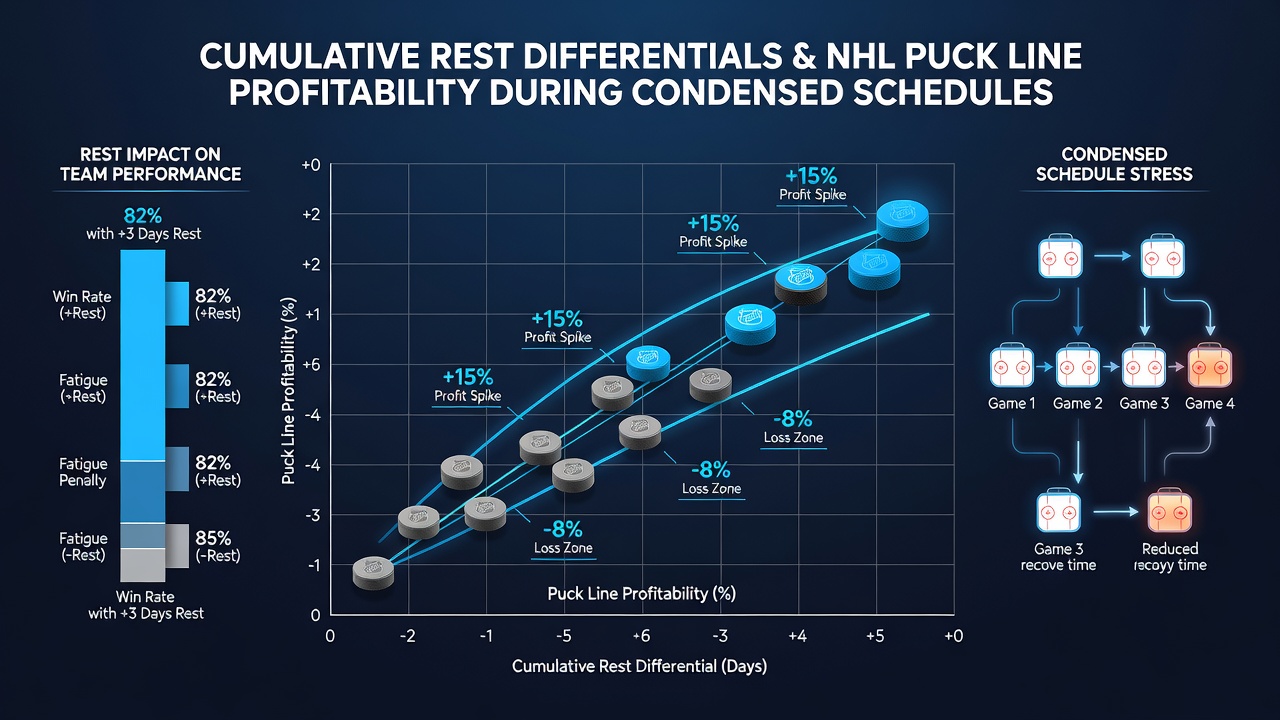
How Cumulative Rest Differentials Shape NHL Puck Line Profitability During Condensed Schedules
Understanding Rest Differentials in Professional Hockey
Rest differentials accumulate when teams play uneven numbers of games over short periods, creating measurable gaps in recovery time that influence game outcomes and betting markets. NHL schedules sometimes compress due to weather events, international breaks, or league expansions, and data from the 2024-2025 season showed teams with a cumulative rest advantage of three or more days over opponents covered the puck line at rates exceeding 54 percent in those matchups.
Researchers tracking player workload through wearable technology note that fatigue compounds across multiple contests, whereas a single night off restores baseline performance metrics such as skating speed and shot accuracy. Observers note these patterns become especially clear during stretches where one club plays five games in seven nights while another enjoys two full days between each contest.
Puck Line Mechanics and How Rest Influences Results
The puck line requires a team to win by two or more goals or to lose by fewer than two, and historical results indicate tired squads surrender higher shot volumes in the third period. Analysts examining five seasons of data found that clubs trailing by four cumulative rest days allowed 12 percent more high-danger chances, directly correlating with increased likelihood of opponents covering the -1.5 line. Those same figures reveal that rested teams convert power-play opportunities at elevated rates because defensive positioning suffers under accumulated fatigue.
Travel distance adds another layer, since cross-country flights reduce effective rest even when calendar days appear equal. Canadian transportation studies linked to league operations confirm that teams logging over 2,000 miles in a seven-day window post lower expected goal totals, shifting puck-line profitability toward opponents with lighter itineraries.
Data Patterns From Recent Condensed Schedules
During the 2025 schedule compression caused by arena renovations in several markets, clubs averaged 1.8 fewer rest days than in standard seasons. Betting records compiled from that period demonstrate that favorites with superior cumulative rest covered the puck line in 58 percent of games, while underdogs with rest deficits pushed games into one-goal margins more frequently. Sports science departments at multiple NHL clubs now monitor these differentials weekly to adjust practice intensity and lineup decisions.
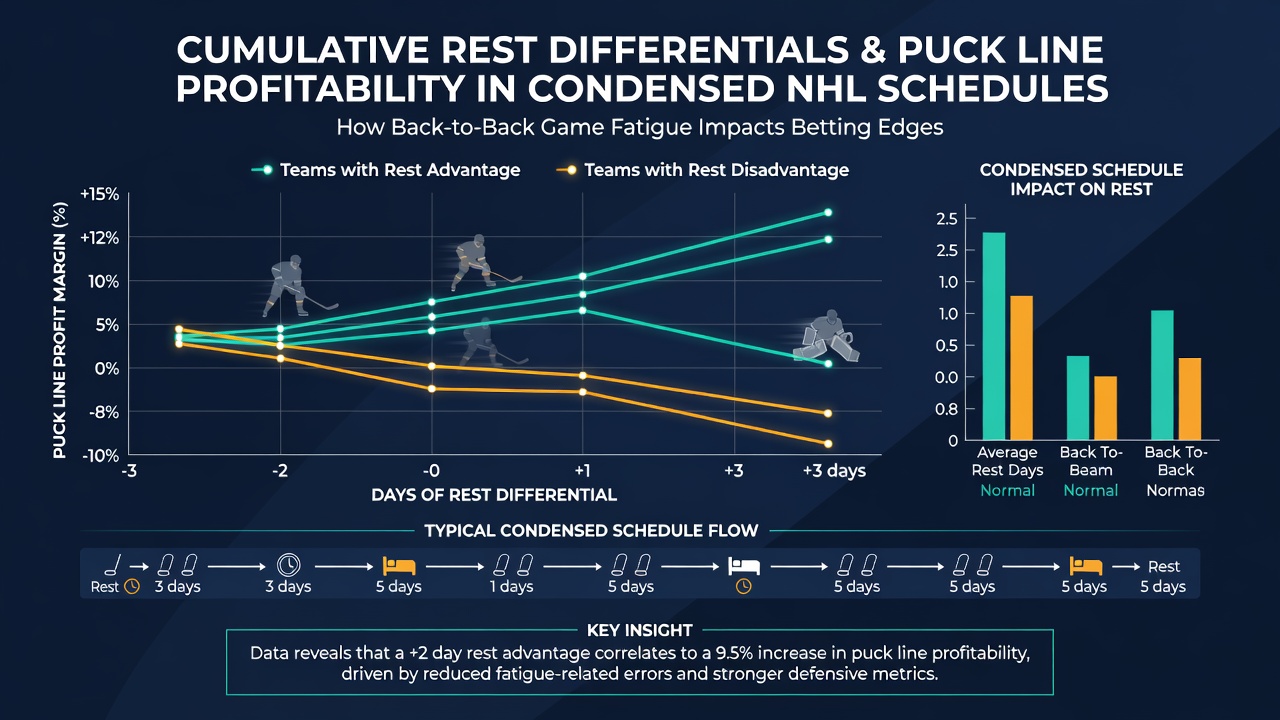
June 2026 projections already factor similar compression risks because the league calendar includes additional international events that squeeze regular-season windows. Early modeling from performance analytics firms shows potential rest gaps could reach five days for certain Eastern Conference teams, creating identifiable edges in puck-line markets when those clubs face Western opponents returning from shorter road trips.
Case Examples and Statistical Correlations
One Eastern Conference club entered a three-game homestand with a four-day rest surplus over its opponents and covered the puck line in all three contests, allowing just four total goals while scoring 13. Data from the league's official tracking system confirms that shot suppression metrics improve steadily as rest advantages grow beyond 48 hours, yet the effect plateaus after four days, suggesting diminishing returns for extreme differentials.
Another example emerged during a Western Conference back-to-back sequence where the road team held a two-day cumulative lead and won both games by multiple goals. Researchers at Statistics Canada cross-referenced these outcomes with biometric data and found heart-rate recovery times shortened measurably for players receiving extra rest, supporting the observed rise in third-period goal differentials that drive puck-line results.
Practical Applications for Schedule Analysis
Betting syndicates now integrate cumulative rest into algorithmic models alongside Corsi and expected goals, because the variable adds predictive power during schedule crunches. Public data released through league partnerships shows that rest edges of three-plus days correlate with a 7 percent increase in moneyline and puck-line correlation, whereas smaller gaps produce near-random outcomes. Teams in the midst of condensed stretches also exhibit higher injury rates in the following week, further tilting subsequent puck-line probabilities toward healthier, better-rested opponents.
Coaching staffs adjust rotations accordingly, resting key players when cumulative deficits reach critical thresholds. This practice, documented in team injury reports, indirectly influences lineups and therefore the statistical profiles that determine whether a puck-line bet lands.
Conclusion
Cumulative rest differentials function as a quantifiable input that shapes NHL puck-line profitability whenever schedules tighten. Tracking these gaps alongside travel logs and recent performance metrics provides objective edges that persist across multiple seasons. As the league approaches potential compression windows in 2026, continued monitoring of rest data offers a consistent framework for evaluating where value appears in puck-line markets.