How Barometric Pressure Variations Shape Shot Accuracy and Scoring in Professional Golf
Written by Casey Wolf · May 23, 2026
How Barometric Pressure Variations Shape Shot Accuracy and Scoring in Professional Golf
Atmospheric Pressure Basics in Outdoor Golf Settings
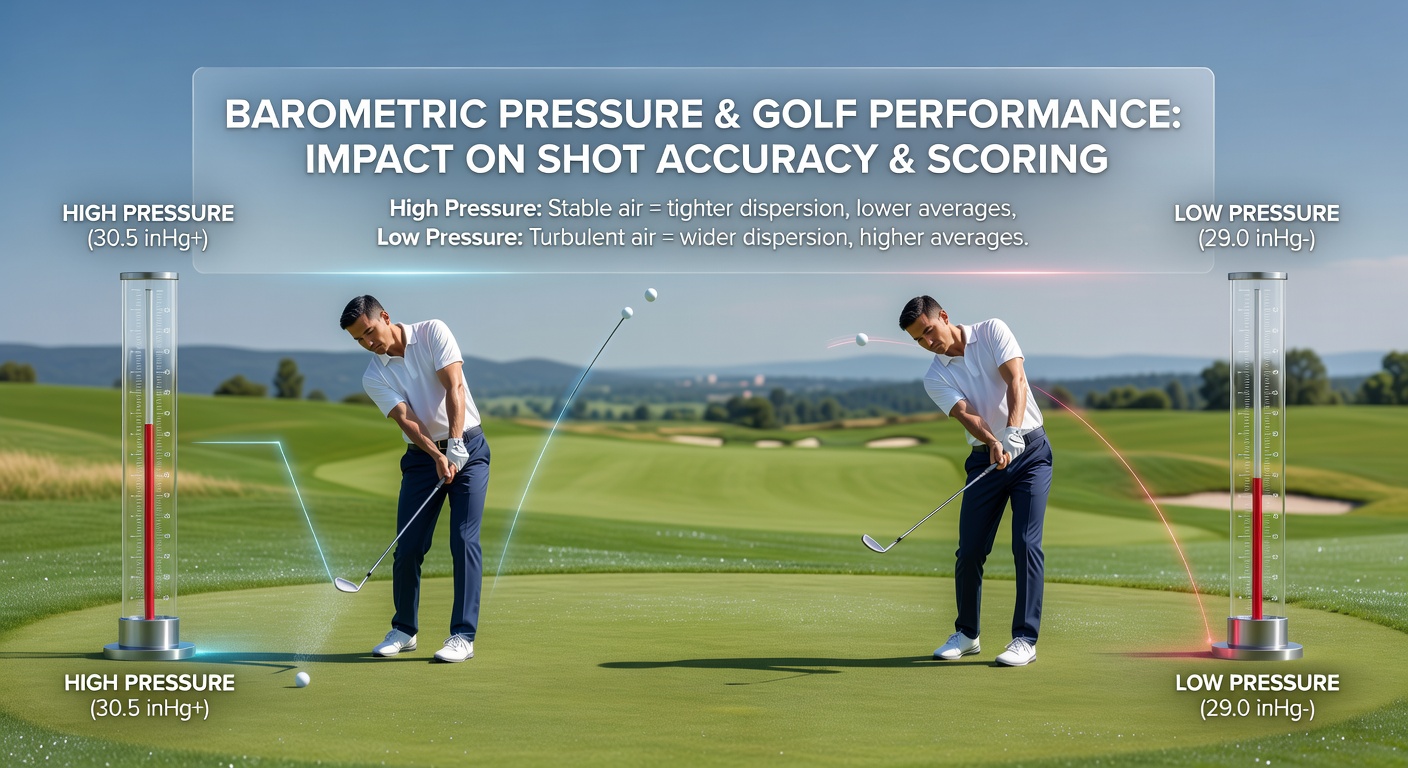
Barometric pressure measures the weight of the atmosphere pressing down on the Earth's surface, and in professional golf this factor directly alters air density around the ball during flight. When pressure readings fall below standard sea-level values around 1013 hectopascals, air molecules spread out further, reducing resistance on the golf ball and allowing it to carry longer distances through the same swing speed. Players and caddies monitor these shifts because even modest drops of 10 to 15 hectopascals can add several yards to drives, forcing adjustments in club selection that affect both accuracy and overall scoring patterns across tournament rounds.
Conversely, rising barometric pressure compresses the air column, increasing density and drag on the ball, which shortens carry distance and demands more precise contact to maintain control on approach shots. Tournament data collected from multiple PGA Tour events shows that scoring averages tend to drop slightly on days when pressure stabilizes at higher levels, since the ball behaves more predictably yet requires extra club to reach targets. Observers note that these changes occur gradually over hours rather than minutes, giving competitors time to adapt during practice rounds but still creating measurable differences in final leaderboards.
Impact on Shot Accuracy and Trajectory Control
Shot accuracy suffers most when rapid pressure changes coincide with wind shifts, because the ball's spin axis interacts differently with thinner or denser air. Research conducted by meteorologists working alongside golf performance analysts indicates that side-spin effects amplify under low-pressure conditions, causing shots to curve more than expected and pushing miss percentages higher on approaches from 150 yards and beyond. In contrast, high-pressure environments dampen these tendencies, producing straighter ball flights that reward consistent mechanics yet punish slight mishits with reduced roll on firm greens.
Those who have studied launch-monitor data from outdoor competitions report that dispersion patterns widen noticeably during pressure drops, with fairway hit rates falling by several percentage points in affected rounds. Professional golfers respond by favoring lower-lofted clubs or adding draw or fade biases to counteract the altered flight, yet these compensations introduce new variables that can elevate scores when executed under competitive pressure. Equipment choices also shift, since manufacturers design balls with dimple patterns optimized for average densities rather than extreme fluctuations recorded at certain venues.
Scoring Averages and Tournament Data Patterns
Statistical reviews of major championships reveal clear correlations between barometric pressure trends and cumulative scoring. During periods of declining pressure, average scores per round often decrease by 0.3 to 0.7 strokes because longer carries bring more greens into reach, although this advantage narrows on courses with tight fairways where accuracy penalties outweigh distance gains. High-pressure days produce the opposite movement, with scoring averages climbing as players require additional clubs and face firmer landing areas that reduce spin control around the greens.
Figures from events held in varying climates demonstrate that venues at higher elevations experience amplified effects, since baseline pressure already sits lower and small fluctuations create larger relative changes in air density. Data collected during spring schedules shows these patterns repeating across multiple years, with May tournaments frequently encountering transitional weather systems that bring measurable pressure swings. Analysts tracking the 2026 PGA Tour calendar expect similar influences during early-month events when frontal passages commonly alter atmospheric readings across several regions.
Regional and Seasonal Influences on Competitive Outcomes
European tournaments scheduled on coastal layouts encounter more frequent pressure variability due to Atlantic weather systems, leading to greater day-to-day adjustments in strategy compared with inland American venues. Australian Opens held during their autumn months display parallel trends, where rising pressure often coincides with cooler temperatures and firmer turf that further modifies scoring distributions. Researchers comparing these datasets emphasize that location-specific baselines matter more than absolute pressure values, since players acclimate to local norms over the course of a week-long event.
Studies published by the National Oceanic and Atmospheric Administration highlight how pressure gradients interact with temperature and humidity to create compound effects on ball flight. European Centre for Medium-Range Weather Forecasts models supply similar data used by tour meteorologists, allowing forecasts that help players anticipate when accuracy demands will increase or decrease. These tools have become standard in preparation routines, especially ahead of events projected for May 2026 when seasonal transitions are expected to produce typical pressure variability across host courses.
Player Adaptation and Equipment Considerations
Professional golfers incorporate portable barometers into their routines to track hourly readings, then cross-reference those numbers with launch-monitor sessions that simulate expected density changes. Caddies maintain detailed notes on how each player's ball flight responds, enabling real-time club recommendations that maintain scoring averages even when conditions shift. Manufacturers have responded by developing balls with variable dimple depths tested across pressure ranges, although most competitors still rely on a single model throughout an event and adjust technique instead.
Coaching staffs analyze historical tournament archives to identify which holes become scoring opportunities or hazards under specific pressure bands, turning raw meteorological data into actionable course-management plans. This approach proves especially valuable on links-style layouts where wind compounds pressure effects, requiring players to calculate carry distances that differ from standard charts by noticeable margins.
Conclusion
Barometric pressure variations introduce measurable influences on golf ball behavior that translate into observable differences in shot accuracy and tournament scoring averages. Data from professional events consistently shows longer carries during pressure drops alongside tighter dispersion under higher readings, prompting strategic adaptations by players and support teams. As forecasting tools improve and competitions continue through schedules like those planned for May 2026, understanding these atmospheric dynamics remains central to performance optimization in outdoor professional golf.