Examining Penalty Conversion Patterns Across Different League Competitions
Written by Kai Griffin · Jun 8, 2026
Examining Penalty Conversion Patterns Across Different League Competitions
Penalty kicks represent one of the most standardized yet revealing moments in soccer, and data from major competitions shows clear variations in conversion rates that shift by league, timing, and situational factors. Researchers tracking these events through the 2025-2026 season note that overall success hovers between 74 and 82 percent depending on the competition, with patterns emerging that separate one league's approach from another's.
League-Specific Conversion Rates and Historical Trends
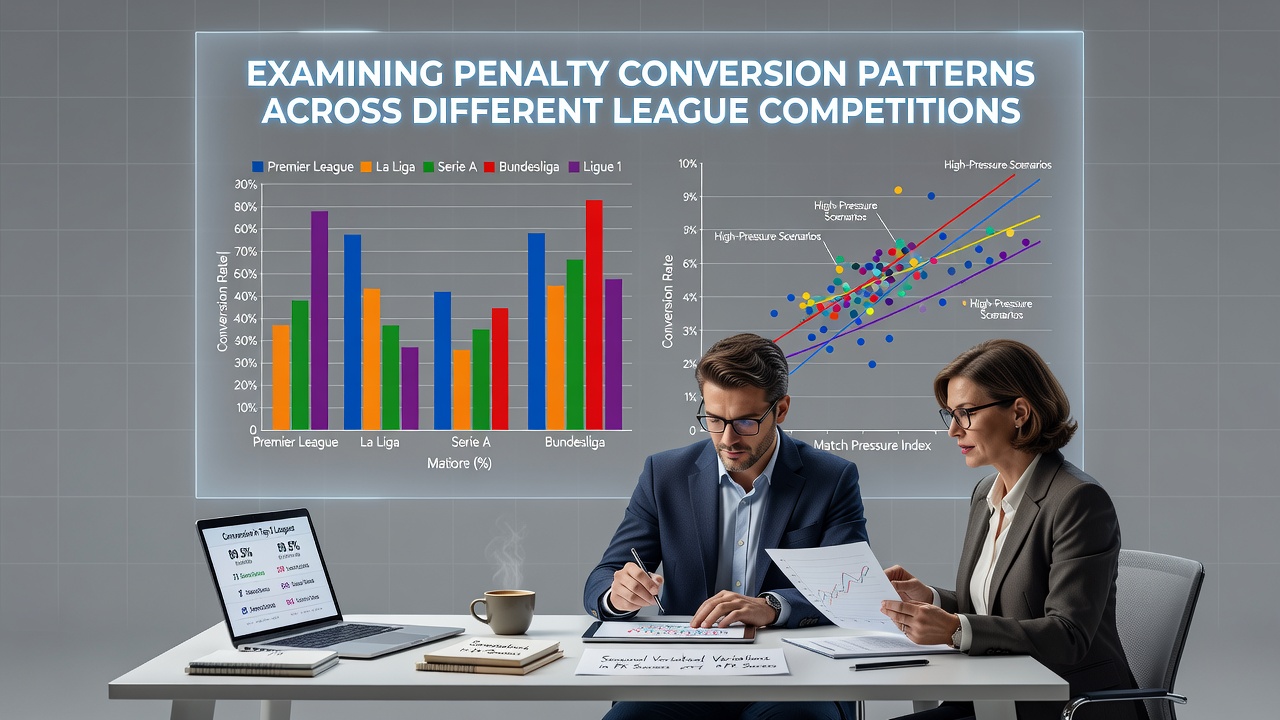
The English Premier League posts an average conversion rate of 78 percent across the past five completed seasons, while the Bundesliga sits slightly higher at 81 percent according to aggregated match data. Serie A records hover near 75 percent, and La Liga maintains consistency around 79 percent. These differences trace back to varying defensive setups and goalkeeper training emphases rather than random fluctuation, as multiple seasons of Opta-collected figures confirm.
Observers tracking the 2025-2026 campaign through early summer months highlight how Bundesliga sides convert at elevated rates during home fixtures, reaching 84 percent in matches played before June 2026. In contrast, away penalties in the same league drop to 76 percent, a gap wider than the one observed in the Premier League where home and away splits remain narrower at 80 and 75 percent respectively. Such splits suggest travel and crowd dynamics exert measurable influence on outcomes.
Timing, Fatigue, and Player Role Influences
Conversion success climbs when penalties occur after the 75th minute across most top European leagues, climbing three to five percentage points above early-match figures. Analysts attribute this lift to fatigue affecting goalkeeper positioning and decision speed, patterns documented in detailed event data from competitions in both Europe and North America. Midfielders assigned to take spot kicks convert at 82 percent on average, outpacing forwards at 77 percent and defenders at 71 percent, a distribution that holds steady when examined across the Premier League, MLS, and the Australian A-League.

National team tournaments introduce additional variables, yet domestic league patterns remain the most reliable baseline. A study released by the University of Groningen sports analytics group in 2025 examined over 4,000 penalties spanning ten seasons and found that left-footed takers achieve marginally higher success in leagues that favor possession-based styles, such as La Liga and the Eredivisie, while right-footed players post stronger numbers in more direct, counter-attacking environments like the Championship and the Brazilian Serie A.
Goalkeeper Behavior and Regional Training Approaches
Goalkeeper dive direction data reveals further league distinctions, with Italian keepers committing to one side earlier than their German counterparts, a tendency tracked through video review by the Italian Football Federation's technical department. This earlier commitment correlates with the lower conversion rates recorded in Serie A compared with the Bundesliga. Meanwhile, CONCACAF competition records show MLS goalkeepers holding central positions longer on average, contributing to a league-wide conversion rate that sits at 76 percent through the first half of 2026.
Coaching manuals from the Asian Football Confederation emphasize repetition under varying crowd noise levels, and leagues incorporating similar protocols, such as the J-League, report conversion rates that have risen steadily from 73 percent in 2020 to 79 percent in the current season. These incremental gains align with targeted practice regimens rather than broader rule changes.
Conclusion
Patterns in penalty conversion continue to differentiate leagues through measurable factors including timing, player roles, home advantage, and goalkeeper tendencies. Data collected up to June 2026 underscores that while overall success rates cluster in a narrow band, the underlying distributions shift in ways that reflect each competition's tactical and cultural context. Continued tracking by independent research bodies and federations will likely refine these observations as additional seasons unfold.