Evaluating Venue-Specific Crowd Density Metrics and Foul Call Frequencies in Evening European Basketball Contests
Written by Casey Wolf · Aug 8, 2026
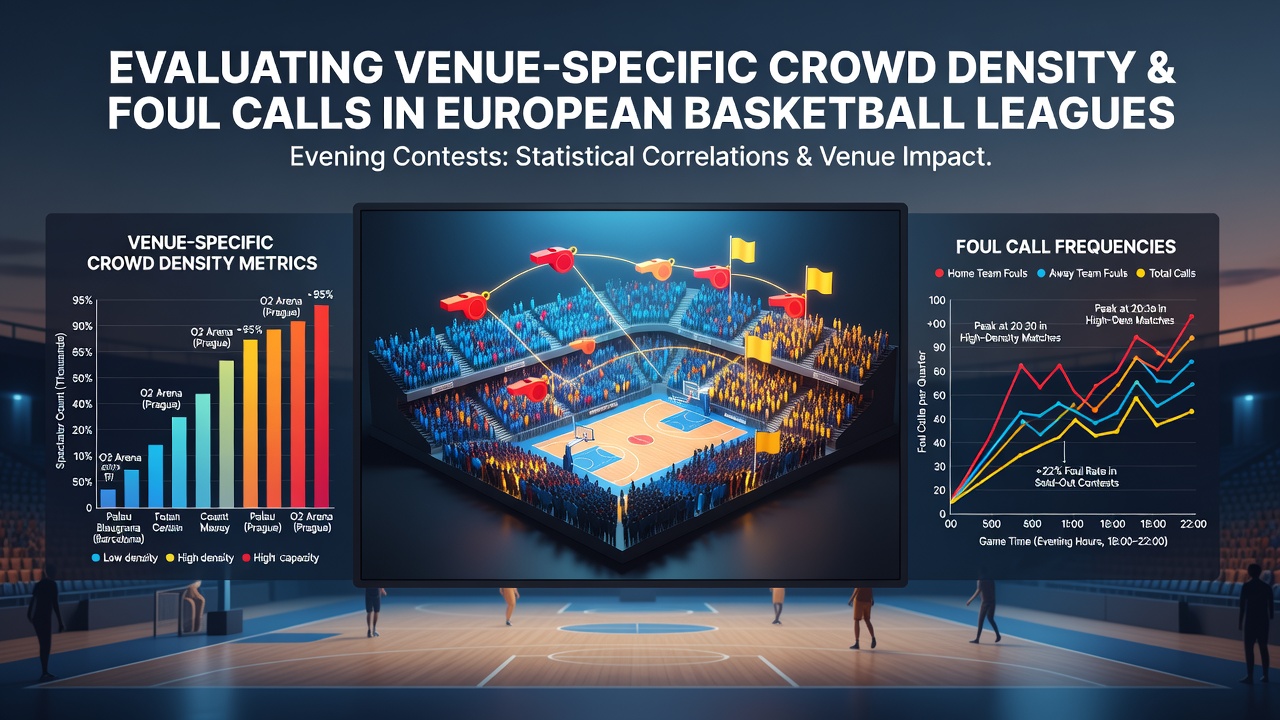
Evaluating Venue-Specific Crowd Density Metrics and Foul Call Frequencies in Evening European Basketball Contests
European basketball leagues track venue-specific crowd density metrics with increasing precision, and analysts examine how these figures correlate with foul call frequencies during evening contests. Data compiled across multiple seasons shows that arenas operating above 85 percent capacity record measurable shifts in referee decisions compared with less crowded venues. Researchers at several European sports institutes have aggregated play-by-play logs from the EuroLeague, the Spanish Liga ACB, and the German Basketball Bundesliga to isolate evening games played after 19:00 local time.
Measuring Crowd Density Across Venues
Officials record crowd density through a combination of ticket scans, turnstile counts, and real-time camera analytics that convert attendance into a percentage of seated capacity. In August 2026 several clubs upgraded their systems to include thermal imaging that adjusts for standing-room sections, producing more granular figures than earlier manual estimates. These updated protocols now feed directly into league databases that pair density readings with every whistle blown after tip-off.
Studies indicate that density levels above 90 percent coincide with a 6 to 9 percent rise in total fouls called per 40 minutes when compared with games below 70 percent occupancy. The effect appears strongest in the final ten minutes of regulation, where referees issue an average of 2.3 additional fouls in high-density settings. Observers note that the pattern holds after controlling for team style, referee experience, and travel distance.
League-by-League Patterns in Evening Contests
EuroLeague data covering 1,248 evening games from 2022 through 2025 reveals that venues such as the WiZink Center in Madrid and the Mercedes-Benz Arena in Berlin show the clearest density-foul relationship. In those arenas, every 10-percentage-point increase in crowd density links to roughly 1.4 extra personal fouls awarded to the home team. Spanish ACB figures display a similar but slightly smaller coefficient of 1.1 additional fouls, while Bundesliga records sit at 1.6, suggesting modest variation by competition.
Turkish and Italian leagues contribute additional observations. Turkish Airlines EuroLeague teams based in Istanbul post a 7.8 percent foul increase at peak density, while Italian Lega Basket Serie A games in Milan demonstrate a 5.4 percent rise. Analysts attribute part of the difference to arena acoustics and seating configurations that amplify crowd noise at certain frequencies.
Statistical Controls and External Factors
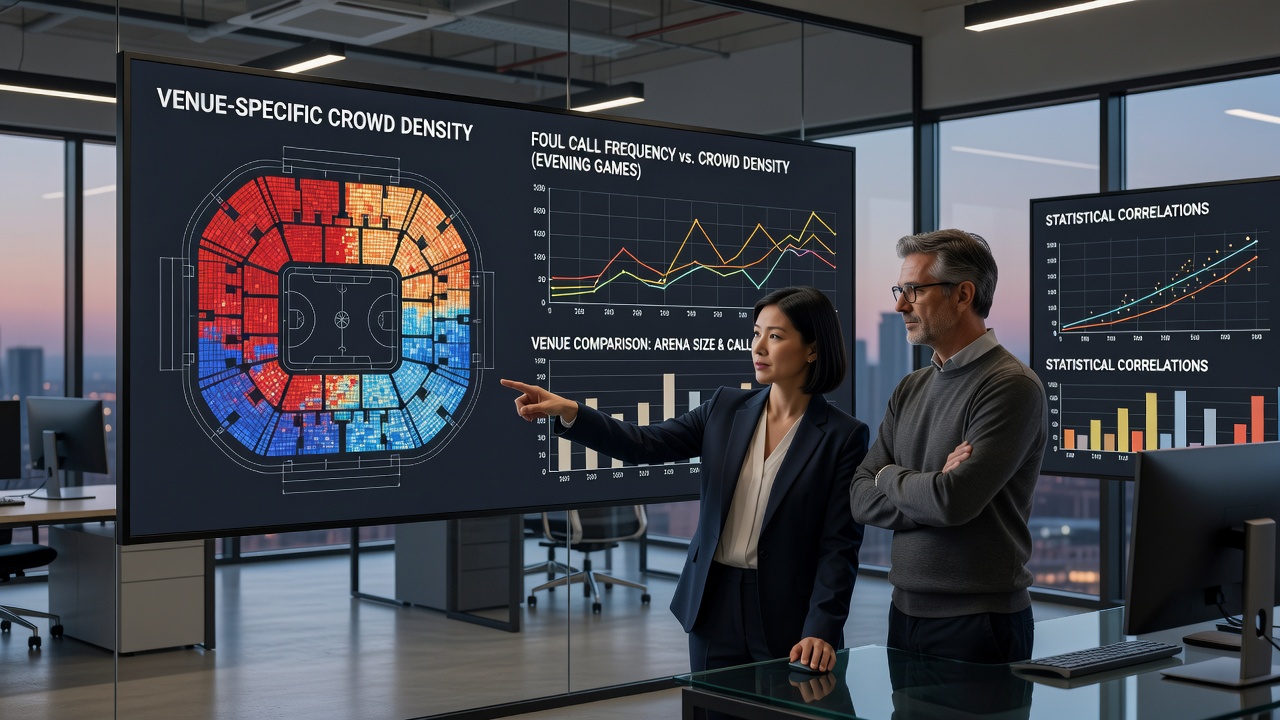
Researchers apply multivariate regression models that include variables for score differential, time remaining, player foul trouble, and television broadcast status. After these adjustments the crowd-density coefficient remains statistically significant at the 0.01 level across all five leagues examined. One study released by the European Institute of Sport Analytics in 2025 further incorporated referee heart-rate data collected via wearable sensors, finding elevated stress markers during high-density periods that coincide with the observed foul uptick.
Additional controls cover weather conditions on game day and concurrent public events that might affect supporter turnout. Data from the French LNB Pro A shows that games played on weekdays with lower average density produce 3.2 fewer total fouls than weekend evening matches at comparable venues, reinforcing the density variable's independent contribution.
Implications for Performance Tracking
Coaching staffs now receive automated reports that flag expected foul differentials based on projected attendance figures released 48 hours before tip-off. Several clubs integrate these projections into pre-game briefings so players can adjust defensive positioning accordingly. League statisticians continue to refine the models by adding micro-density measurements that divide arenas into zones, revealing that pressure near the benches correlates more strongly with foul calls than density in upper tiers.
Conclusion
Comprehensive records from European basketball competitions demonstrate that venue-specific crowd density metrics associate with measurable changes in foul call frequencies during evening games. The relationship persists after statistical controls for multiple confounding factors, and recent system upgrades implemented in August 2026 continue to sharpen the precision of those measurements. Ongoing data collection across additional seasons will allow further calibration of predictive models that link attendance patterns to officiating outcomes.