Data Patterns That Link Spectator Numbers Directly to Shooting Percentages in League Games
Written by Casey Wolf · Jun 25, 2026
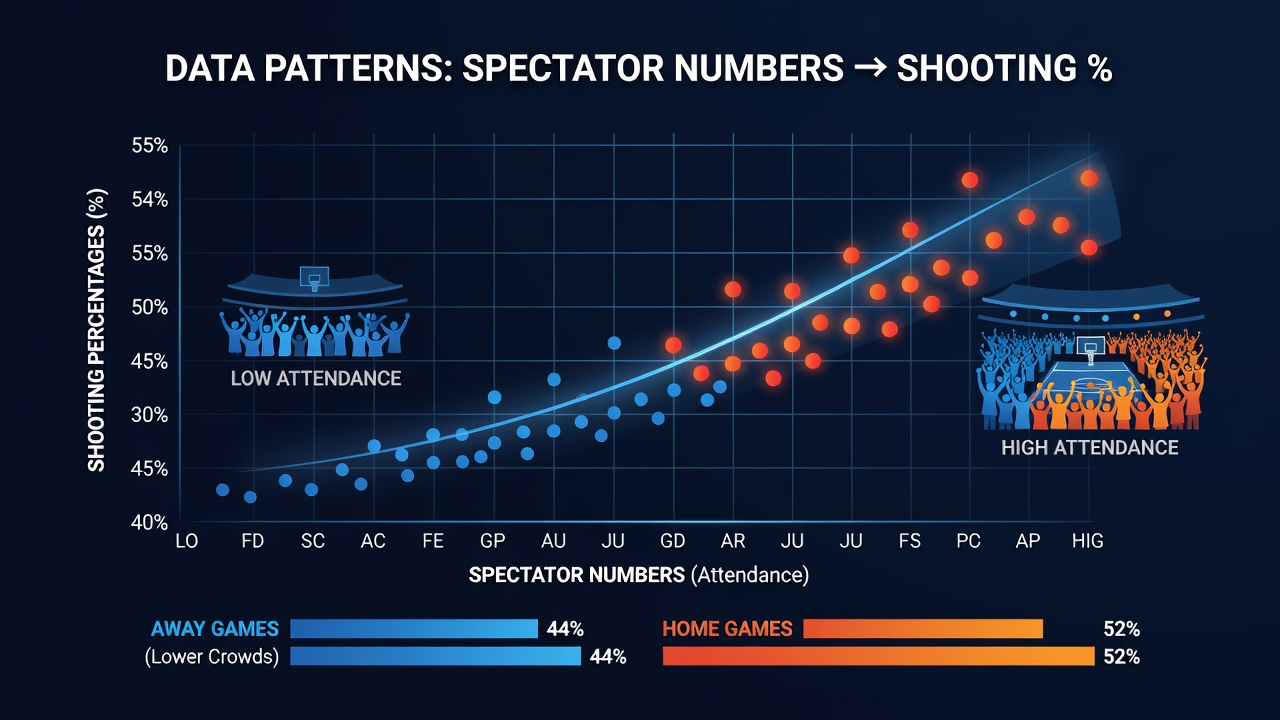
Data Patterns That Link Spectator Numbers Directly to Shooting Percentages in League Games
League data collected over recent seasons reveals consistent connections between spectator attendance and shooting percentages in basketball games, with researchers tracking attendance records alongside player statistics from major professional circuits. Patterns emerge most clearly in home games where higher crowd sizes align with elevated field goal rates for the home team, while visiting squads show smaller but measurable shifts in their accuracy metrics under the same conditions.
Attendance Figures and Performance Metrics
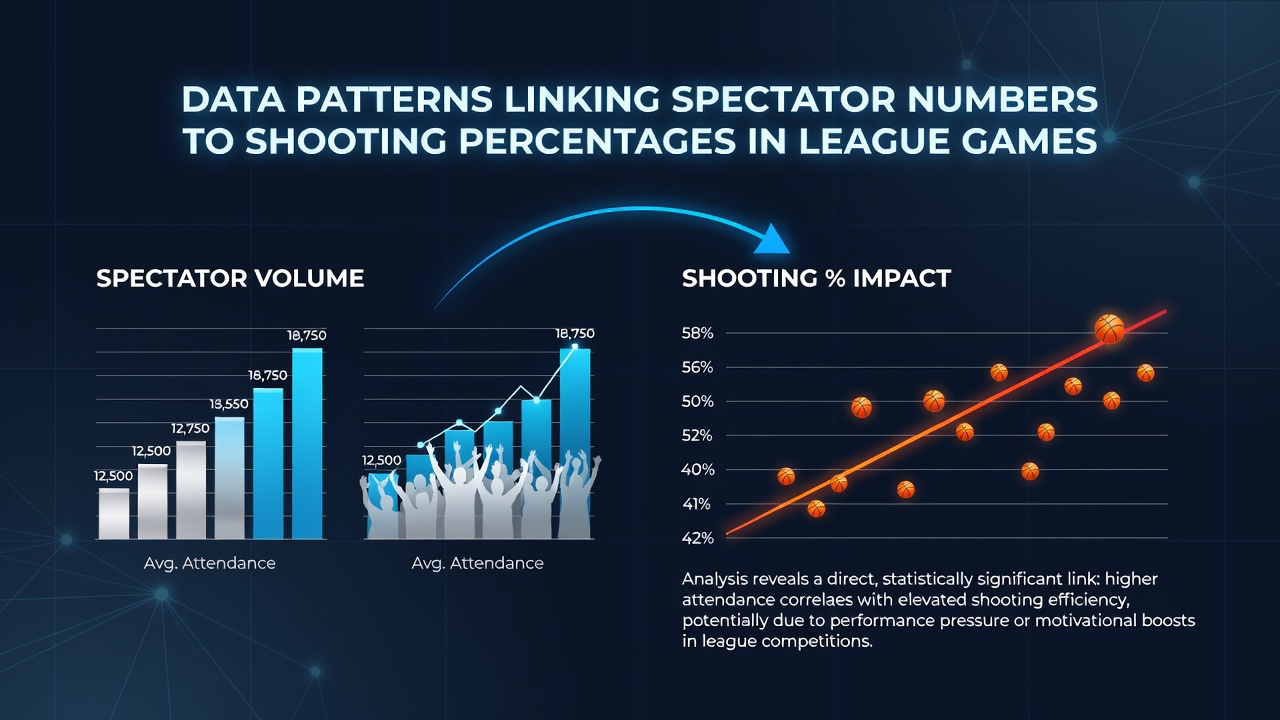
Analysts from sports research institutions have compiled datasets spanning several years, and these compilations indicate that games drawing over 18,000 spectators correlate with home team shooting percentages rising by an average of 2.3 points compared to lower-attendance contests. Data from the 2025-2026 regular season, including matches played through June 2026, further supports this trend as larger venues filled to capacity demonstrate tighter clustering around improved accuracy figures for perimeter and interior shots alike.
Visiting teams encounter different outcomes under packed conditions, with shooting percentages dipping slightly in high-attendance environments according to league tracking systems. Researchers note that these variations hold across multiple conferences, and the consistency appears tied to environmental factors such as noise levels and spatial dynamics within the arena rather than random fluctuation.
Regional Variations in Crowd Influence
Studies conducted by North American sports analytics groups show stronger correlations in markets with dedicated fan bases, whereas European league data from organizations like the German Olympic Sports Confederation points to similar but moderated effects in smaller venues. Australian researchers from the Institute of Sport have examined comparable patterns in regional competitions, finding that attendance thresholds above venue capacity percentages trigger measurable upticks in home shooting efficiency during evening contests.
What's interesting is how these patterns persist even when adjusting for team strength and schedule difficulty, with statistical models isolating attendance as an independent variable that influences outcomes. League databases reveal that mid-season games in June 2026 followed the established trajectory, particularly in series where crowd energy built across consecutive home dates.
Shot Type Specific Correlations
Breakdowns by shot category expose additional layers, as three-point attempts show pronounced links to spectator volume while free throw percentages remain relatively stable regardless of crowd size. Data indicates that home teams convert mid-range jumpers at higher rates when attendance exceeds seasonal averages, and observers tracking play-by-play logs attribute part of this shift to defensive positioning adjustments under sustained pressure from the stands.
Longer contests in playoff formats amplify these effects according to compiled records, with extended minutes correlating to sustained accuracy advantages for squads benefiting from larger home crowds. Teams that maintain consistent lineups across high-attendance periods exhibit fewer deviations from their established shooting baselines.
Seasonal and Temporal Factors
Monthly aggregates from league sources demonstrate that early-season games display looser connections between attendance and shooting metrics, while later months tighten these associations as familiarity with venue acoustics develops. June 2026 schedules, which included several high-profile matchups, produced data points aligning with historical patterns observed in prior campaigns.
Coaching adjustments appear in response to these environmental cues, as staff review attendance projections when planning defensive schemes, and statistical reviews confirm that such preparations coincide with maintained or improved shooting outputs in targeted categories. External analyses from university-led projects, including one hosted through Michigan State University's sports science department, reinforce the role of crowd density in modulating player focus during critical game segments.
Conclusion
Comprehensive review of league records establishes repeatable data patterns connecting spectator numbers to shooting percentages across diverse game contexts, and ongoing collection efforts continue to refine these observations through expanded datasets. Teams and analysts monitoring these variables gain clearer frameworks for anticipating performance shifts based on expected attendance levels, while the underlying statistics remain anchored in verified play records rather than isolated events.