Correlating Recovery Timelines From Minor Setbacks With Subsequent Performance Trends Across League Schedules
Written by Kai Griffin · Jun 27, 2026
Correlating Recovery Timelines From Minor Setbacks With Subsequent Performance Trends Across League Schedules
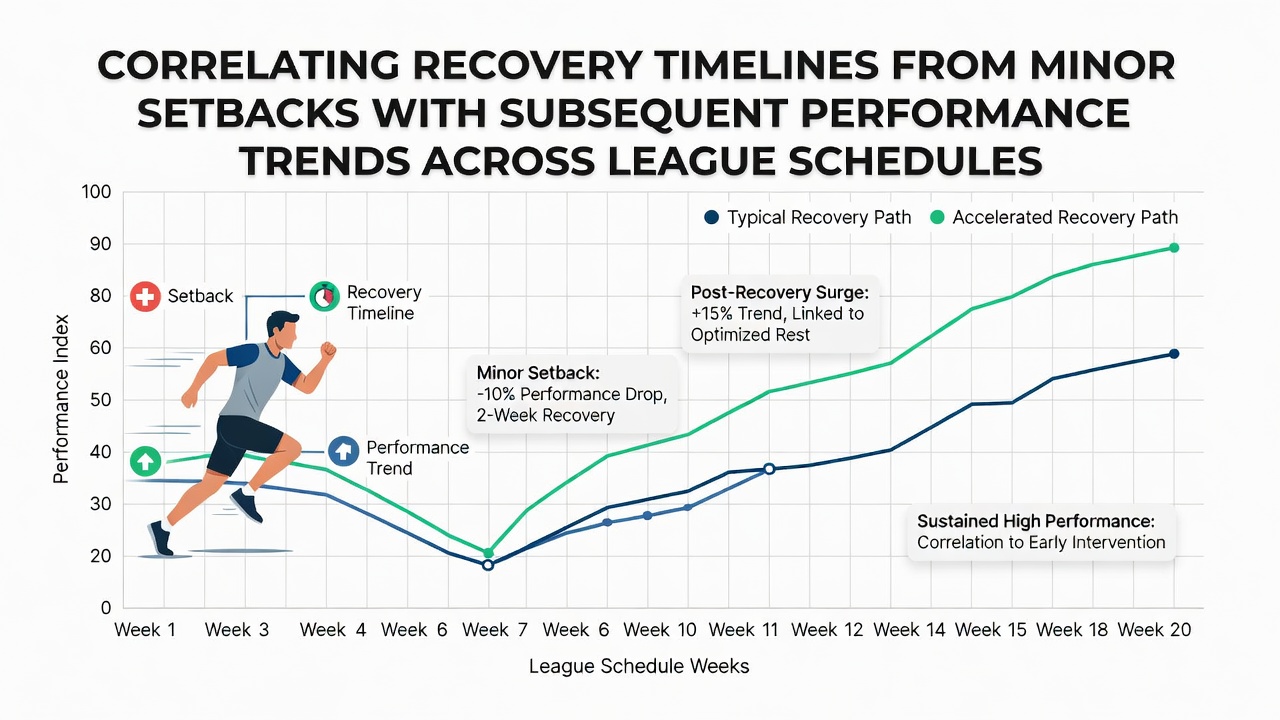
Professional leagues across multiple sports maintain dense calendars that place repeated physical demands on participants, and researchers track how short absences due to minor issues like muscle strains or upper respiratory infections shape output once athletes return. Data from several seasons shows measurable shifts in metrics such as points per game, completion percentages, and team win rates when recovery windows vary from a few days to several weeks.
Defining Minor Setbacks in League Contexts
League medical staffs classify minor setbacks as those requiring between three and twenty-one days away from full participation, while longer absences fall into separate categories. Studies compiled by the NCAA Injury Surveillance Program indicate that soft-tissue strains and viral illnesses account for the majority of these brief interruptions in basketball, soccer, and ice hockey schedules. Observers note that these events occur more frequently during congested periods, particularly in the winter months when travel and fixture density increase exposure risks.
Recovery Timeline Patterns and Performance Data
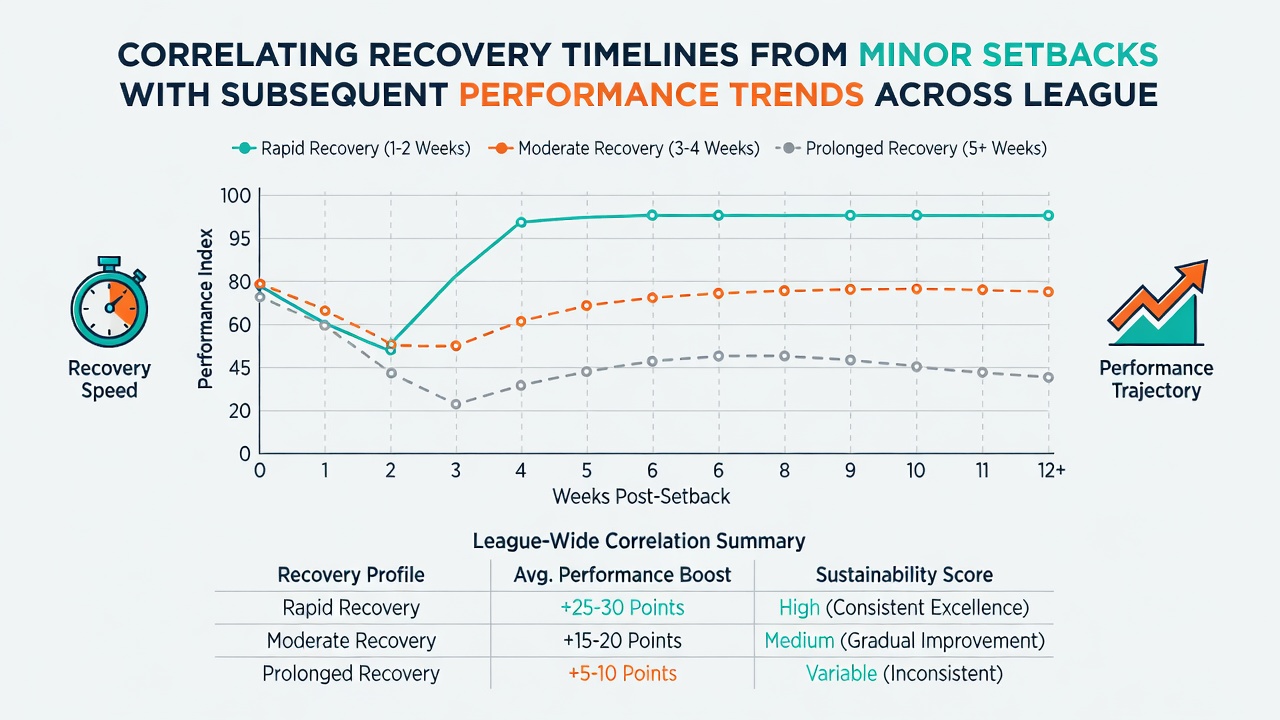
Analyses of player-tracking systems reveal distinct trends once athletes resume activity. Those cleared after seven to ten days often post elevated workload metrics in the first two weeks back, including higher sprint distances and shot attempts, yet their efficiency numbers such as field-goal percentage and turnover rates tend to stabilize only after an additional ten days of match integration. In contrast, recoveries extending past fourteen days correlate with steadier but initially lower output, as athletes rebuild match fitness gradually across subsequent fixtures.
League-Specific Observations
European soccer datasets from the 2024-2025 campaign highlight that midfielders returning after short hamstring issues recorded a 6 percent rise in successful passes per ninety minutes once they had completed three full matches. NBA figures released by league analytics departments in June 2026 showed similar patterns among perimeter players, where three-point accuracy climbed steadily between the fourth and eighth games post-absence when recovery fell between five and twelve days. Australian Football League records demonstrate that ruckmen with recoveries under ten days maintained contested-mark rates closer to pre-setback baselines than those sidelined longer, although their hit-out numbers required more time to normalize across the remaining schedule.
Schedule Density as a Modifying Factor
Back-to-back fixtures and international breaks alter the relationship between recovery length and later results. Research published by the University of Queensland’s School of Human Movement and Nutrition Sciences examined rugby league matches and found that players returning after nine days posted higher tackle-completion percentages in the next three rounds when the intervening schedule contained only one match per week. When the calendar compressed to three matches in fourteen days, the same recovery window produced slower returns to pre-injury tackle efficiency, with full stabilization occurring closer to the fifth subsequent appearance.
Team-Level Trends Across Full Seasons
Collective performance data further illustrates these connections. Teams that managed multiple short-term absences during the first half of a campaign often displayed improved defensive organization in the second half, according to tracking reports from the German Bundesliga archive. The pattern appears linked to the structured reintegration protocols that emphasize progressive loading, allowing units to reestablish coordination before high-stakes periods such as playoff qualification rounds. Individual contributions, measured through expected goal differentials and plus-minus ratings, also followed predictable arcs once medical clearance aligned with the documented recovery bands.
Methodological Approaches in Current Research
Statisticians combine wearable sensor outputs with official match logs to isolate recovery effects from confounding variables such as opponent strength and travel distance. Linear mixed models applied to multi-season datasets allow researchers to estimate performance slopes at weekly intervals after return, producing confidence intervals that narrow as sample sizes grow. These techniques have been adopted by several North American franchises and by the Canadian Olympic Committee’s sport science unit, which released summary findings covering winter sports in early 2026.
Conclusion
Across basketball, soccer, rugby, and additional codes, the length of time athletes spend away from competition following minor setbacks shows consistent associations with the shape and timing of performance recovery. Shorter windows frequently coincide with quicker rebounds in volume-based metrics, while moderately extended recoveries align with steadier efficiency gains over a longer sequence of matches. Schedule density modifies these relationships, and ongoing data collection from league-wide systems continues to refine the precision of these correlations for medical and coaching staffs.