Congested Calendars Reshaping Over/Under Markets in Football and Basketball
Written by Kai Griffin · Aug 20, 2026
Congested Calendars Reshaping Over/Under Markets in Football and Basketball
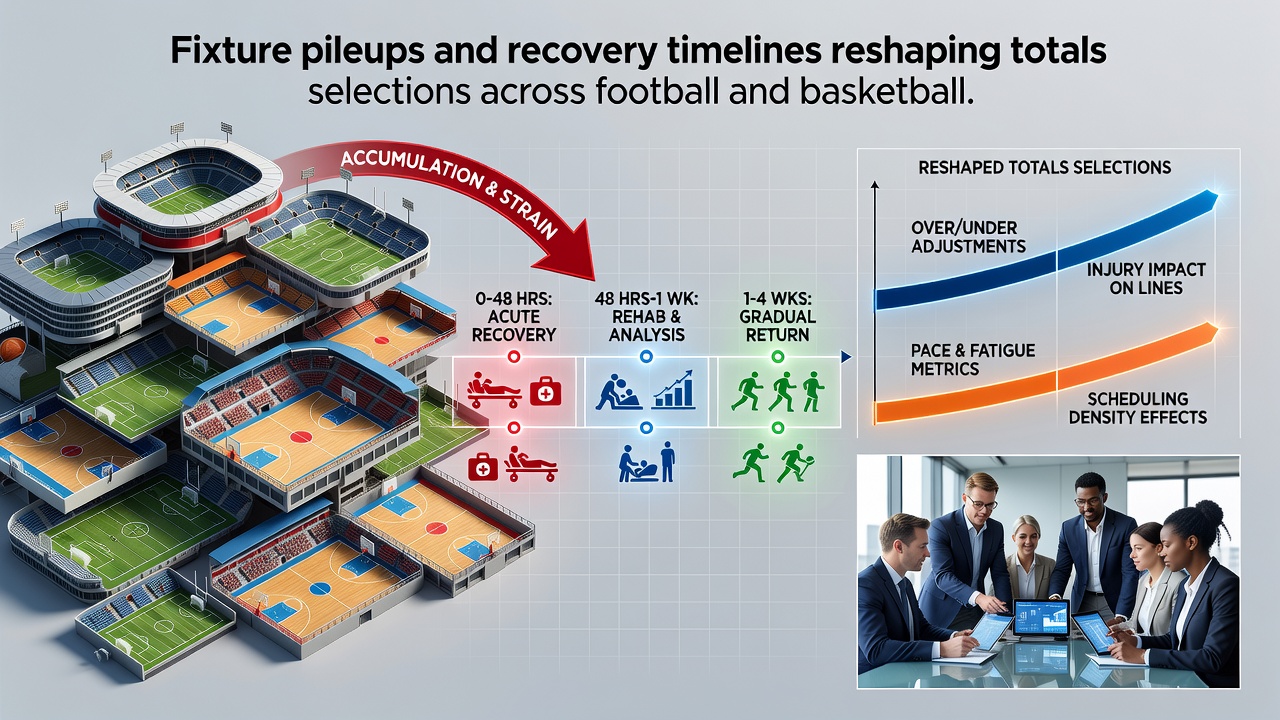
Fixture pileups have become a recurring feature across professional football and basketball calendars, with data from major leagues indicating measurable effects on scoring outputs that directly influence totals selections. In August 2026, the period immediately following the FIFA World Cup created compressed preparation windows for club sides in Europe and elsewhere, as players returned from international duty and faced immediate domestic and European commitments. Observers note that recovery timelines, typically spanning 72 to 96 hours for muscle repair and glycogen replenishment according to sports science literature, often fall short during these stretches, leading to altered game dynamics.
Understanding Fixture Congestion Patterns
League schedules in top European football divisions and NBA conferences frequently place teams in sequences of three matches within seven days, a pattern documented in official competition calendars released each summer. When recovery periods shrink below optimal thresholds, teams exhibit reduced high-intensity running distances and lower shot volumes, figures that appear consistently in post-match analytics from organizations tracking player workloads. Basketball presents parallel challenges, where back-to-back games across time zones limit sleep and physical restoration, producing observable drops in points per possession during the second half of such sequences.
Impact on Scoring and Totals Selections
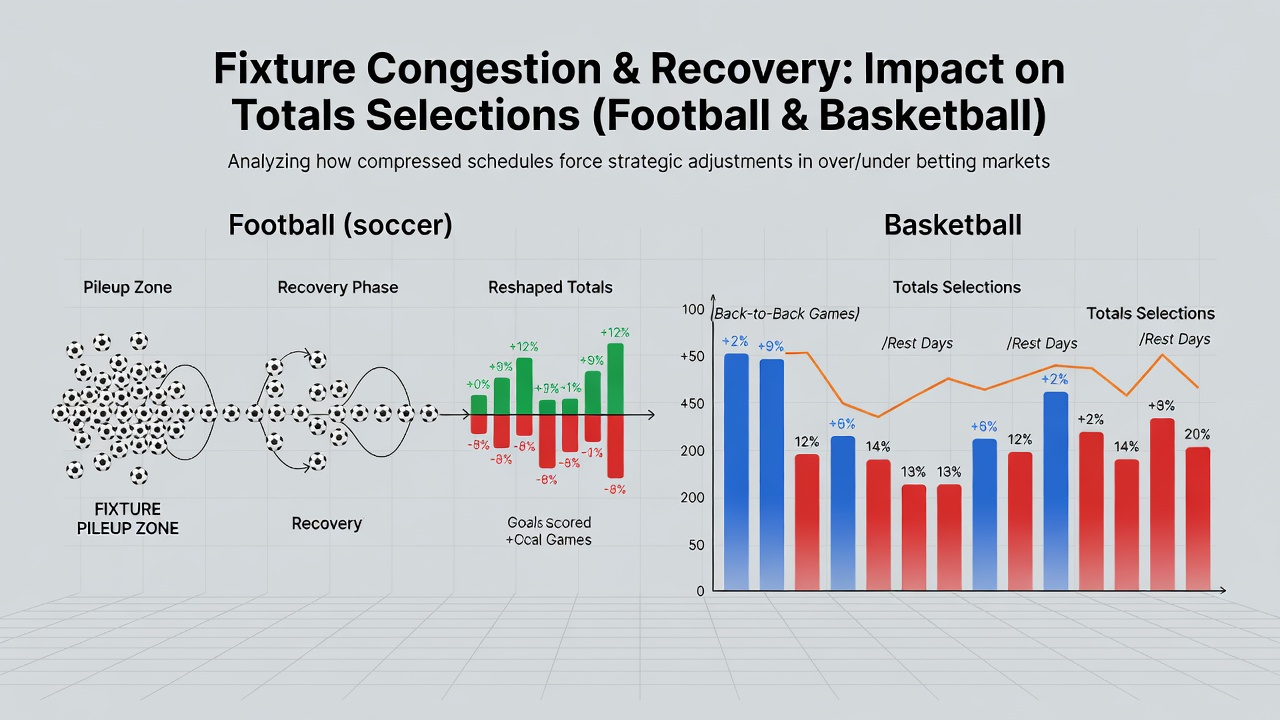
Research compiled by academic institutions shows that football matches following short recovery intervals record fewer goals on average, with one multi-year analysis of Premier League and La Liga fixtures finding a 12 percent reduction in total goals when teams play with less than three full rest days. Similar patterns emerge in basketball, where NBA teams on the second night of back-to-backs post lower combined team totals, particularly in the first quarter when transition efficiency declines. Those tracking betting markets report that totals selections have shifted toward unders in these scenarios, as league-wide data sets reveal consistent suppression of offensive output rather than isolated team anomalies.
Recovery Timelines and Physiological Data
Physiological monitoring programs employed by clubs track markers such as creatine kinase levels and heart rate variability, revealing that incomplete recovery correlates with diminished sprint frequency and defensive pressure. In basketball, studies from North American research centers highlight how travel across multiple time zones extends the time needed for circadian adjustment, further compressing effective preparation. Football data from UEFA technical reports similarly links fixture density to increased injury incidence, which in turn reduces squad depth and scoring threat from substitutes. These measurable factors contribute to lower expected totals without requiring subjective interpretation of team motivation or style.
League-Specific Examples and Statistical Trends
During the 2025-26 NBA season, teams playing four games in six days produced combined scoring averages approximately 8 points below season norms, according to official league tracking systems. Football provides comparable evidence from the Bundesliga, where winter fixture clusters around the holiday period routinely generate lower goal tallies in midweek rounds. Australian Institute of Sport analyses of high-performance athletes across team sports confirm that neuromuscular fatigue accumulates across consecutive fixtures, directly affecting shooting percentages and passing accuracy that underpin offensive production. Such trends allow totals markets to adjust lines based on schedule density rather than traditional season averages.
Strategic Adjustments in Totals Betting
Market operators and data providers incorporate recovery metrics into pre-match models, adjusting totals downward when multiple starters exceed defined workload thresholds. In football, this appears in Champions League group stages where midweek domestic matches precede European fixtures, producing documented declines in second-half goal rates. Basketball totals selections similarly reflect rest advantages, with data indicating stronger unders performance when one side enters on limited recovery. External sources such as NCAA sports science publications and reports from the Australian Sports Commission supply supporting datasets on athlete load management that inform these adjustments across both codes.
Conclusion
Fixture pileups combined with constrained recovery timelines produce measurable shifts in scoring outputs across football and basketball, reshaping totals selections through documented reductions in goals and points. League data, physiological tracking, and academic studies consistently demonstrate these effects without reliance on narrative explanations. As calendars remain dense into future seasons, including the post-2026 World Cup window, the relationship between schedule density and totals markets continues to rest on empirical patterns rather than isolated observations.