Charting the Ripple Effects of Fixture Congestion on Squad Rotation Choices in Domestic Leagues
Written by Rafael Beck · Aug 15, 2026
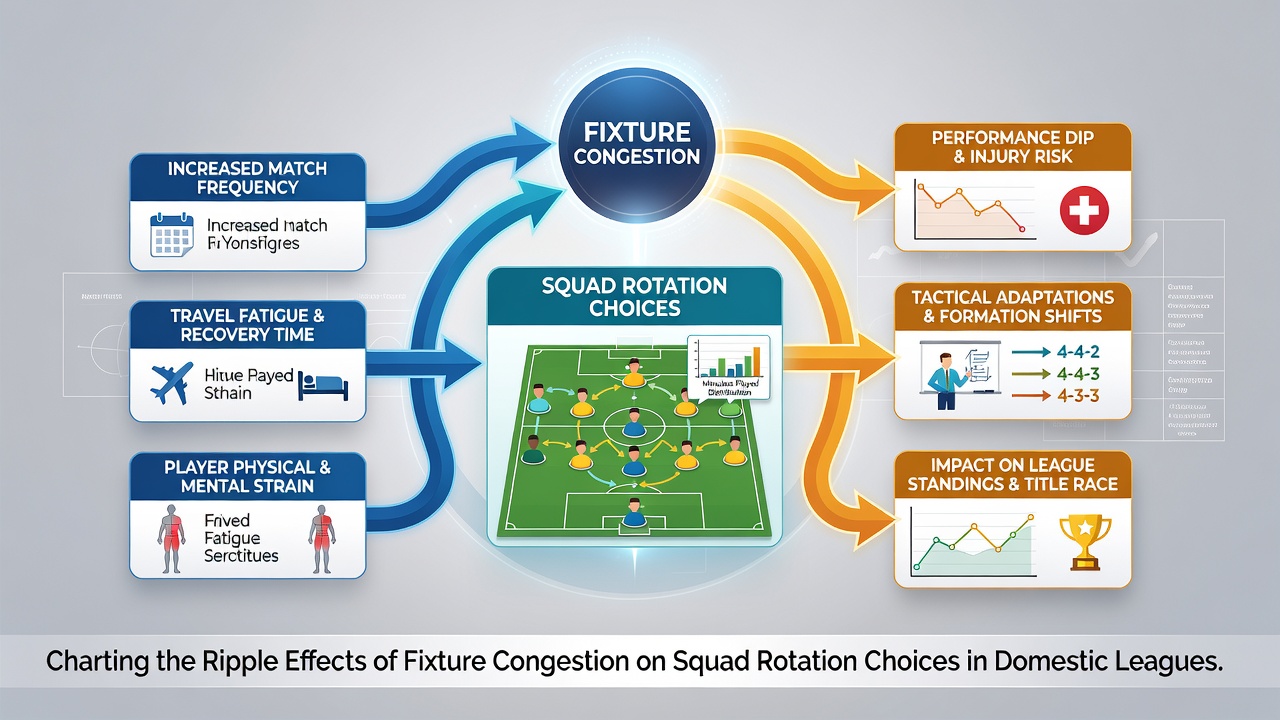
Charting the Ripple Effects of Fixture Congestion on Squad Rotation Choices in Domestic Leagues
Fixture congestion creates overlapping demands across domestic leagues, cup competitions, and European tournaments that force managers to adjust player availability and lineup selections throughout the calendar year, and data from multiple seasons shows clear patterns in how teams respond when matches pile up within short windows.
Understanding Fixture Congestion Patterns
Domestic leagues schedule up to 38 matches per team in top divisions such as the Premier League and Bundesliga while additional fixtures from national cups and continental competitions push totals higher, and researchers tracking workload across the 2025-2026 campaign noted that several clubs faced stretches of six matches in 18 days during December and January periods that carried into the following summer preparations. In August 2026 the new season opens with many sides already managing recovery from late-season tournaments, which amplifies early congestion when international qualifiers overlap with league restarts.
Observers tracking these schedules point out that midweek European matches often land between weekend league games and create compressed recovery cycles measured in hours rather than days, while data from league-wide tracking systems reveal average rest periods dropping below 72 hours for key players during peak months.
Squad Rotation Strategies Across Leagues
Managers respond by cycling players through starting roles and bench appearances to distribute minutes, and studies of rotation frequency in the Bundesliga show teams averaging 3.2 changes per match during congested blocks compared with 1.8 changes in less crowded periods. Evidence from La Liga indicates that sides competing on multiple fronts rotate defensive units more aggressively than attacking lines because data links higher match counts to elevated muscle injury rates in defenders who log the most kilometers.
Coaches in the Serie A and Ligue 1 have adopted similar approaches by monitoring GPS and heart-rate metrics supplied by club medical staff, which allows them to identify players whose workload thresholds approach risk levels and then insert alternatives from academy or bench options without altering tactical structure.
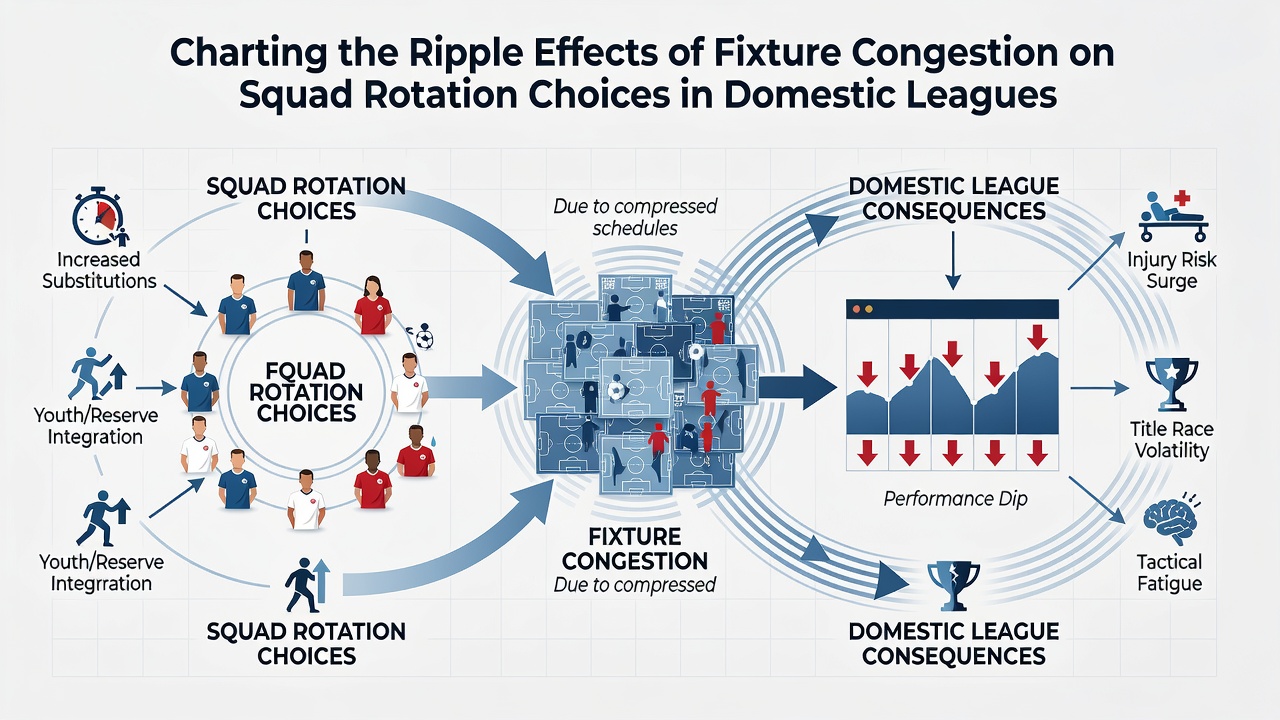
Impact on Player Workload and Performance Metrics
Performance analysis reveals that teams maintaining consistent rotation preserve sprint speed and pass completion rates more effectively than those relying on the same starting eleven, and figures compiled by sports science groups indicate a 12 percent drop in high-intensity efforts after consecutive 90-minute appearances without adequate rest. Those who have examined injury databases across five major European leagues report that players exceeding 50 matches in a season face a 28 percent higher likelihood of soft-tissue problems compared with peers limited to 40 appearances or fewer.
Rotation decisions also affect set-piece organization and pressing triggers because substitute players bring different movement profiles, yet clubs that prepare multiple lineups in training sessions mitigate these disruptions according to reports from the German Football Association and the Australian Institute of Sport on workload management protocols.
League-Specific Responses and Data Trends
English Premier League clubs have increased use of five-substitute rules when available to refresh legs late in matches during congested runs, while Spanish and Italian sides lean on squad depth charts that prioritize two players per position to handle fixture clusters. Research published through academic channels such as the Journal of Sports Sciences shows that rotation correlates with maintained league position for mid-table teams but produces variable results for title challengers who prefer continuity in high-stakes fixtures.
Additional patterns emerge when international breaks interrupt domestic schedules because returning players often require extra recovery time, and tracking data from the 2025-2026 window illustrates how clubs in northern and southern hemispheres adjust differently due to travel demands and climate shifts.
Conclusion
Fixture congestion continues to shape squad rotation choices across domestic leagues as managers balance performance preservation against competitive demands, and ongoing collection of workload metrics along with injury statistics provides clearer guidance for future scheduling adjustments and player-management protocols.