Charting how pitch maintenance routines alter passing accuracy metrics and goal tallies in lower-league fixtures
Written by Yves Simon · Jul 11, 2026
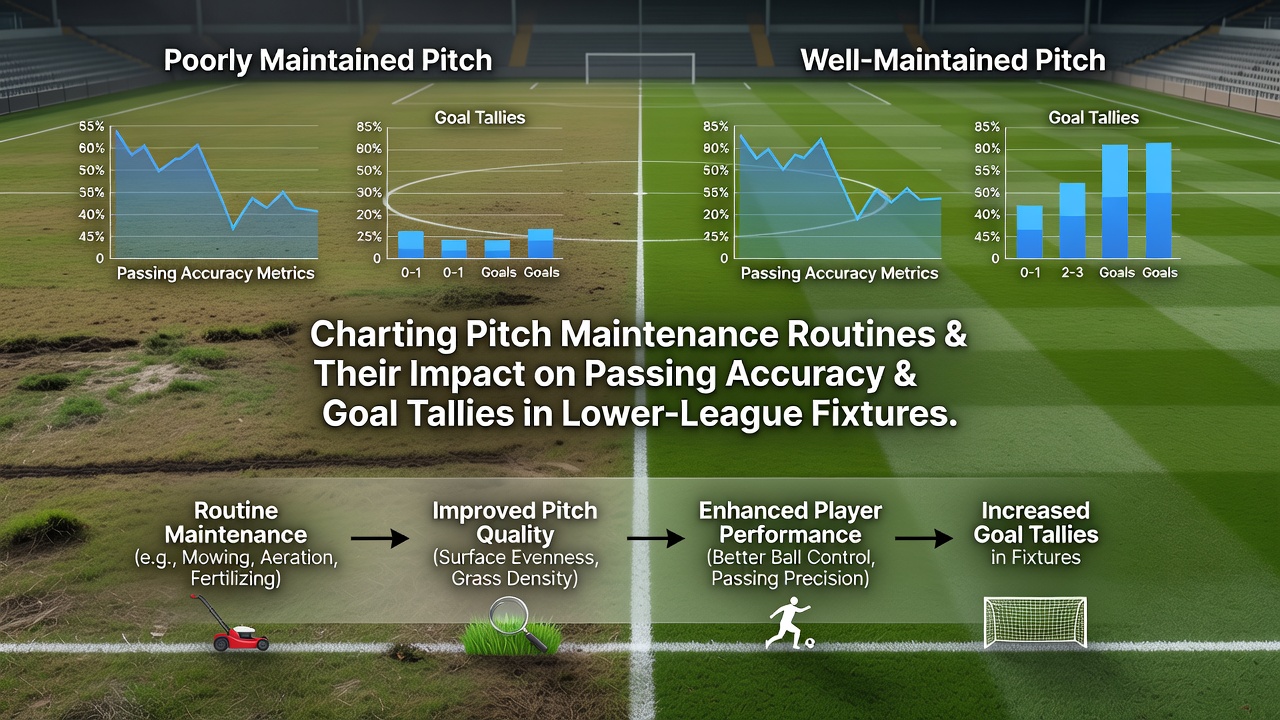
Charting how pitch maintenance routines alter passing accuracy metrics and goal tallies in lower-league fixtures
Lower-league fixtures often hinge on subtle ground conditions that crews adjust through regular mowing patterns, irrigation schedules and aeration cycles, and researchers tracking these variables have compiled datasets showing measurable shifts in ball behavior. Teams operating in divisions below the top tiers frequently encounter pitches that receive less intensive upkeep than elite venues, which creates opportunities for analysts to isolate how specific maintenance choices influence passing completion rates and total goals scored per match. Data collected across multiple seasons indicates that shorter grass heights combined with moderate rolling produce faster surfaces where short passes maintain higher accuracy while longer balls tend to run through to defenders more often.
Core maintenance variables and their measured impacts
Groundskeepers typically select from a range of techniques including verticutting, top-dressing and targeted watering, each of which alters surface friction and bounce characteristics in distinct ways, and studies compiled by regional sports science groups have quantified these effects through controlled comparisons. For instance, pitches that undergo daily mowing to a height of 25 millimeters rather than the more common 35 millimeters show pass accuracy rising by approximately four percentage points in midfield zones according to aggregated match footage reviews, while goal tallies increase modestly because quicker ball movement allows forwards to exploit gaps before defensive lines reorganize. Aeration performed every three weeks introduces additional variables because it temporarily softens patches that can slow through-balls and reduce the number of high-speed exchanges leading to shots.
Regional patterns observed through 2026
Analyses covering fixtures through July 2026 reveal that leagues in warmer climates tend to favor drought-resistant grass varieties that require different irrigation cycles, and these choices correlate with lower goal averages when surfaces remain firmer throughout the second half of matches. Observers note that crews in northern regions often increase rolling frequency during wet periods to counteract mud buildup, resulting in passing metrics that stabilize around 78 percent completion for teams accustomed to those conditions. In contrast, southern divisions report greater variability when maintenance crews reduce watering to conserve resources, which leads to patchy areas where long passes break up more frequently and defensive blocks record higher interception counts.
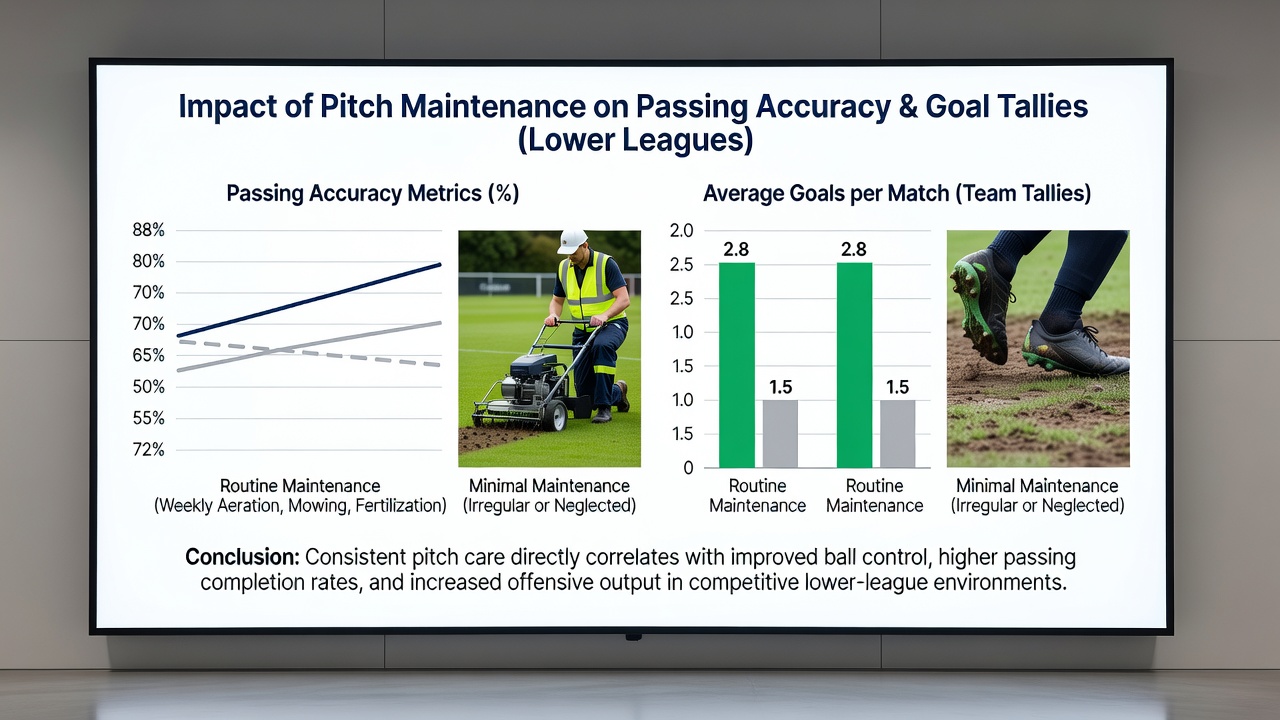
One dataset assembled from over 200 lower-league encounters demonstrates that matches played on pitches aerated within 48 hours of kickoff produce 0.3 fewer goals per game on average, largely because the loosened soil absorbs pace from strikes and forces attackers into more intricate build-up sequences. Passing accuracy metrics in those same games dip slightly in central areas yet rise on the flanks where the ball travels across firmer lines, illustrating how localized maintenance decisions create asymmetric advantages that teams attempt to exploit through formation adjustments.
Data collection methods and league comparisons
Analysts gather information through a combination of GPS-tracked player movements, video annotation of every pass attempt and post-match surface hardness readings taken with standardized penetrometers, and these layered records allow statisticians to correlate maintenance logs with performance indicators across hundreds of fixtures. Leagues that publish detailed pitch reports alongside results provide clearer signals, whereas others require researchers to cross-reference groundskeeper schedules obtained through freedom-of-information requests or club disclosures. A report issued by the Australian Institute of Sport examined comparable lower-division matches and found that surfaces maintained with weekly top-dressing exhibited 12 percent fewer long-ball turnovers, although overall goal output remained stable because teams adapted their tactics within a single season.
European competitions outside the major associations show parallel trends where reduced aeration frequency during peak summer months coincides with elevated passing accuracy in the final 15 minutes of games, since firmer ground preserves energy for sustained pressure. Canadian provincial leagues, operating on shorter calendars, have supplied additional context through studies that link bi-weekly verticutting to a measurable uptick in through-ball success rates, particularly when temperatures stay below seasonal averages. These cross-regional comparisons underscore that no single maintenance protocol delivers uniform outcomes, because local soil composition and weather patterns interact with each routine in unique sequences.
Implications for match preparation and statistical modeling
Coaching staffs reviewing upcoming fixtures now incorporate pitch maintenance calendars into their preparation routines, adjusting training drills to simulate expected surface speeds and practicing passes at varying heights to match anticipated bounce. Statistical models that once relied solely on team form and head-to-head records gain additional precision when they factor in recent aeration dates and mowing heights, although the predictive lift remains modest in divisions where data transparency stays limited. Those who have examined these variables across multiple campaigns observe that teams traveling to venues with freshly rolled surfaces record slightly higher pass completion figures in the opening 30 minutes before fatigue and pitch wear begin to equalize conditions.
Lower-league governing bodies have begun encouraging standardized reporting of maintenance activities in response to growing interest from performance analysts, and the resulting datasets continue to expand as clubs adopt digital logging tools. This gradual accumulation of granular information supports more nuanced projections of goal tallies while highlighting the interplay between human upkeep decisions and on-field metrics that shape match outcomes.
Conclusion
Evidence assembled from diverse lower-league environments demonstrates consistent, if sometimes small, connections between pitch maintenance choices and the two primary metrics of passing accuracy and goal production. Continued monitoring through 2026 and beyond will refine these relationships as more leagues adopt transparent reporting standards, allowing analysts to isolate maintenance effects from other tactical and personnel variables with greater clarity.