Altitude Adjustments: Recalibrating Performance Metrics for Soccer Sides in Mountain Venues
Written by Rafael Beck · Jun 11, 2026
Altitude Adjustments: Recalibrating Performance Metrics for Soccer Sides in Mountain Venues
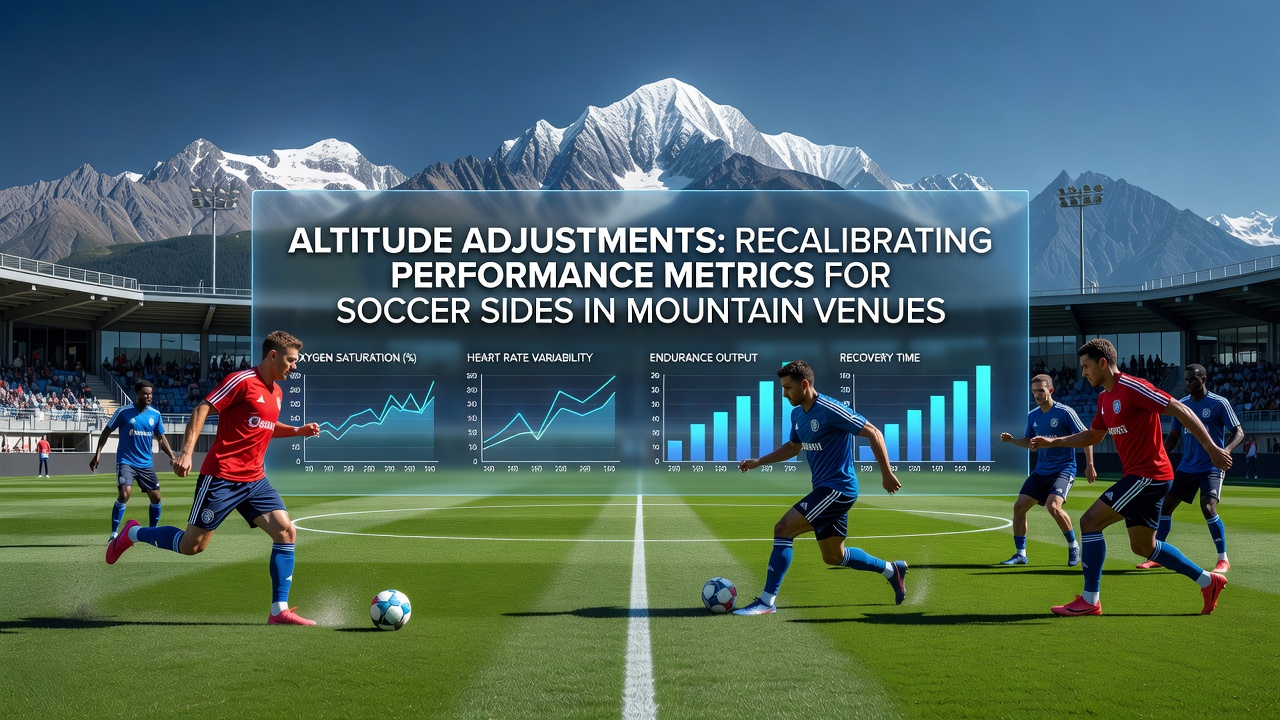
High-altitude venues create distinct challenges for soccer teams because reduced oxygen availability alters how players perform across matches, and analysts have developed methods to adjust performance data accordingly. Venues such as those in Bolivia, Ecuador, and Peru sit well above 2,500 meters, where atmospheric pressure drops and oxygen partial pressure falls, which directly affects aerobic capacity. Researchers track metrics like total distance covered, high-speed running volume, and recovery intervals, then apply corrections so comparisons between sea-level and mountain games remain accurate.
Physiological Effects on Player Output
Oxygen uptake declines by roughly 7 to 10 percent for every 1,000 meters of elevation gain according to studies published through the National Institutes of Health, which forces athletes to operate at higher percentages of their maximum heart rate even during moderate efforts. Teams that arrive without adequate acclimatization periods often record 15 to 20 percent less high-intensity distance in the second half compared with their usual outputs at lower elevations. Data collected from wearable tracking devices shows that sprint frequency remains relatively stable, yet repeated sprint ability drops because phosphocreatine resynthesis slows under hypoxic conditions.
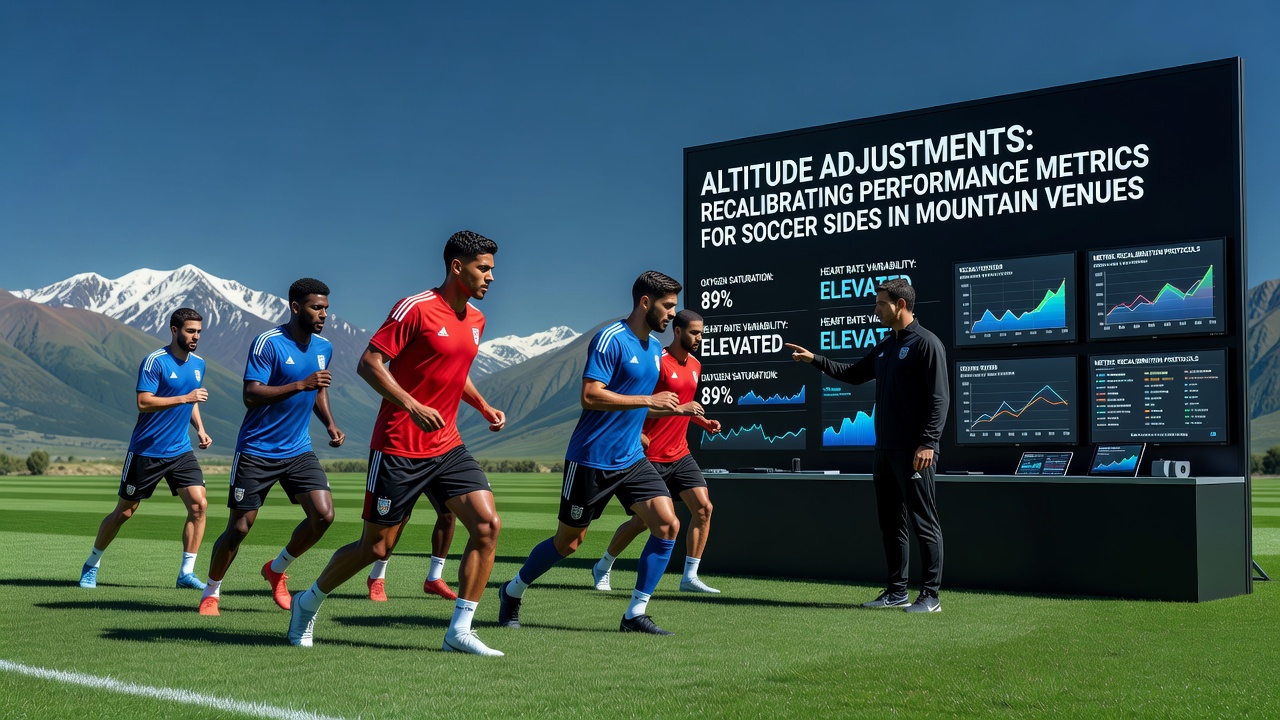
Coaches therefore adjust training loads in the days before matches, incorporating shorter intervals at moderate intensity while monitoring blood oxygen saturation levels. Medical staff from CONMEBOL-affiliated clubs routinely use portable oximeters during warm-ups to establish baseline readings that later help interpret in-game fatigue markers. These protocols have become standard ahead of international fixtures scheduled through mid-2026, when several South American qualifiers will again feature stadiums above 3,000 meters.
Statistical Recalibration Techniques
Performance analysts recalibrate raw numbers by factoring in elevation-specific multipliers derived from historical match files. One common approach multiplies observed high-speed running distances by 1.12 to 1.18 when games occur above 2,800 meters, which aligns the figures with equivalent sea-level efforts. Researchers at the University of British Columbia developed regression models that incorporate temperature, humidity, and match duration alongside altitude, producing adjusted player ratings that correlate more closely with video-coded effort levels.
Tracking companies now embed these corrections into post-match reports so scouts can compare a midfielder’s work rate across different venues without distortion. For example, a player who covers 9.8 kilometers at La Paz might receive an adjusted total of 11.2 kilometers once the model accounts for hypoxic stress. Such recalibrations help national federations evaluate squad depth more reliably ahead of tournaments that include both lowland and highland fixtures.
Case Examples from Recent Seasons
During the 2024 Copa Libertadores campaign, teams visiting Quito’s Estadio Olímpico Atahualpa recorded average decreases of 1.4 kilometers in total distance per player compared with their home matches, yet goal-scoring rates stayed consistent because defensive lines compressed and transition opportunities increased. Analysts adjusted the raw GPS outputs using a factor based on 2,850 meters of elevation and found that the visiting sides actually maintained comparable work rates once the correction was applied.
National team staff preparing for 2026 World Cup qualifiers have begun sharing anonymized datasets across confederations to refine these models further. One dataset released by the Australian Institute of Sport examined 42 matches at varying altitudes and confirmed that recovery time between high-intensity bouts lengthens by 12 to 18 percent above 3,000 meters. The findings prompted several federations to modify substitution patterns and in-game hydration strategies.
Implementation Across Clubs and Federations
Clubs with regular high-altitude exposure maintain internal databases that log every player’s adjusted metrics over multiple seasons. These records allow technical directors to identify individuals whose aerobic profiles adapt quickly and those who require longer acclimatization windows. European sides that travel to South America for friendly matches or tournament stages now request pre-tour altitude simulations using hypoxic tents, which produce measurable improvements in repeat sprint performance within seven to ten days.
Software platforms used by professional leagues integrate elevation data automatically when generating reports, reducing manual calculations and minimizing errors. Observers note that the same player can post markedly different raw numbers depending on venue, yet the adjusted figures often align within a narrow range once the models account for oxygen availability and travel fatigue.
Conclusion
Recalibrating performance metrics for mountain venues allows coaches, analysts, and federations to evaluate player contributions on a consistent scale regardless of elevation. Data from multiple confederations demonstrates that altitude affects aerobic outputs more than anaerobic actions, which guides both preparation routines and in-match decisions. As international calendars continue to feature high-altitude fixtures through 2026 and beyond, the use of elevation-adjusted statistics remains a practical tool for accurate assessment.